
Introduction
In the world of high-precision motion control, not all bearings are created equal. While standard ball bearings handle rotation with low friction, flexible ball bearings (also called thin-race or harmonic drive bearings) do something remarkable: they repeatedly deform elastically while still allowing smooth rolling motion.
These specialized bearings are the heart of the wave generator in harmonic drives (or strain wave gears), enabling compact, lightweight, zero-backlash gearboxes with extremely high reduction ratios — often 50:1 to 320:1 in a single stage.
Whether you’re building a collaborative robot arm, a precision CNC machine, or an aerospace actuator, understanding flexible ball bearings can help you appreciate (and select) the right components for demanding applications.
Before the blog, we want to introduce us a professional flexible ball bearings supplier in China. Get to us freely if you have any inquiry related to that.
What Are Flexible Ball Bearings?
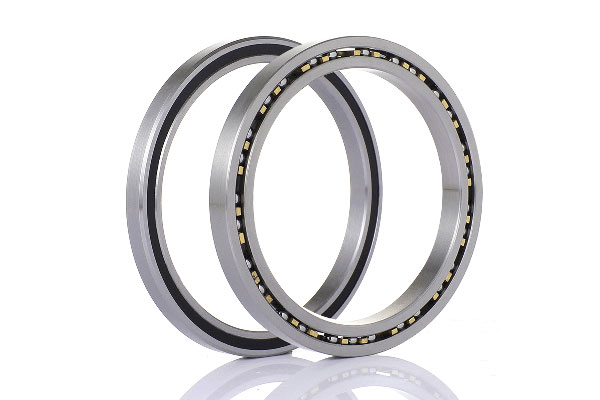
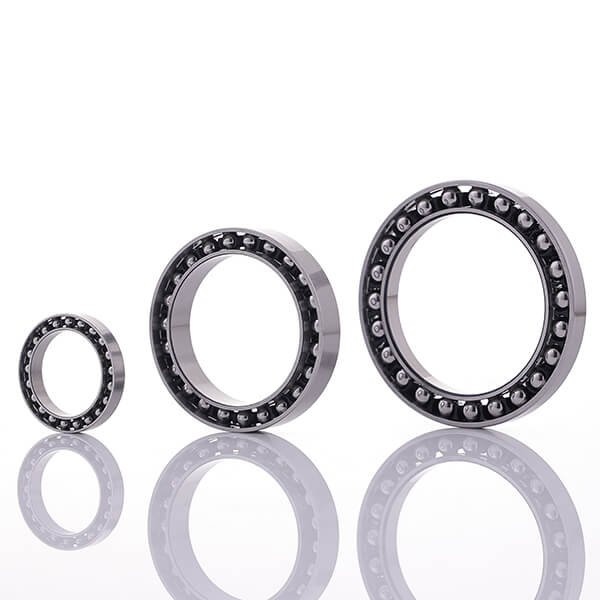
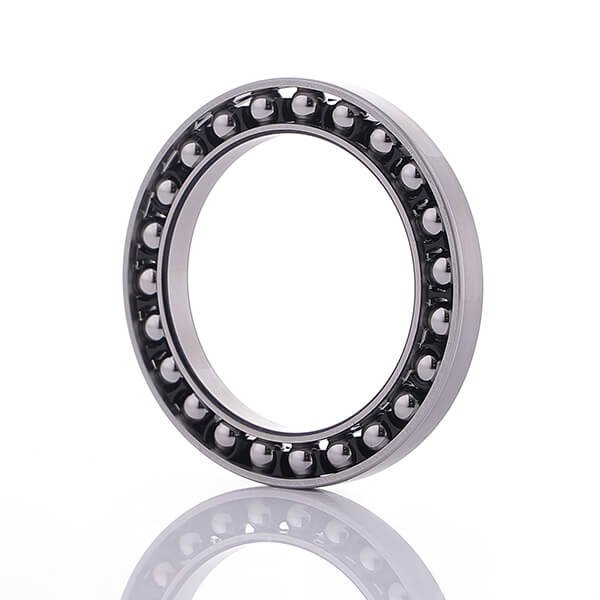
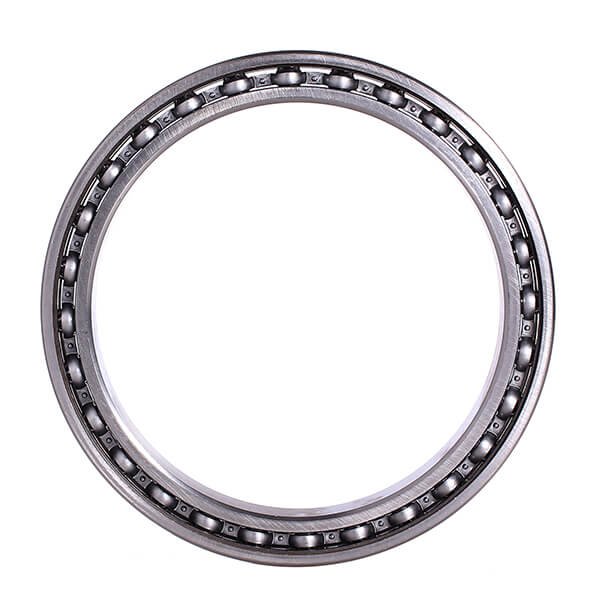
Flexible ball bearings are thin-section deep-groove ball bearings designed with exceptionally thin inner and outer rings (races). This thin-wall construction allows the entire bearing to conform to an elliptical (oval) shape without binding or failing under repeated deformation.
Unlike conventional bearings that must remain perfectly round and rigid, flexible bearings are engineered to handle cyclic elastic deformation while the balls continue to roll smoothly between the raceways. They typically use precision steel balls (or sometimes ceramic) and a cage to maintain even spacing during flexing.
They are most commonly known as harmonic reducer flexible bearings or thin-race flexible bearings.
Structure and Key Components
A typical flexible ball bearing includes:
- Inner ring — Mounts directly onto the elliptical cam (wave generator plug). It deforms into an oval shape and rotates with the input.
- Outer ring — Very thin and flexible; it transmits the deforming “wave” to the flexspline.
- Rolling elements — High-precision balls that roll in deep-groove raceways, even as the rings change shape.
- Cage (separator) — Often a single-piece or two-piece design (plastic, brass, or steel) to keep balls evenly spaced. Some designs rely on shaft shoulders for additional cage support.
- Raceways — Optimized for both radial loads and the bending stresses caused by continuous elliptical deformation.
The bearing is pressed over an elliptical hub, forcing both rings into an oval profile. As the wave generator rotates, the major axis of the ellipse revolves, creating a traveling deformation wave.
How Flexible Ball Bearings Work in Harmonic Drives
Harmonic drives (strain wave gears) consist of just three main parts: the wave generator, flexspline, and circular spline. The flexible ball bearing is the core of the wave generator.
Here’s the step-by-step principle:
- The elliptical wave generator (rigid cam + flexible bearing) is inserted into the flexspline — a thin-walled, flexible cup with external teeth.
- The flexspline deforms into an elliptical shape, causing its teeth to engage with the internal teeth of the rigid circular spline at two opposite points (along the major axis of the ellipse).
- When the wave generator rotates, the elliptical deformation “travels” around the circumference like a wave.
- The flexspline typically has 2 fewer teeth than the circular spline. Each full rotation of the wave generator causes the flexspline to rotate backward by those 2 teeth relative to the fixed circular spline.
- Result: Extremely high gear reduction, zero backlash, and high torque density in a compact package.
The flexible bearing performs two critical roles:
- It converts potential sliding friction into low-friction rolling contact.
- It supports radial loads while enduring millions of deformation cycles.
This unique mechanism, based on the elastic mechanics of metals, delivers precision that traditional gearboxes struggle to match.
Advantages of Flexible Ball Bearings
- Zero backlash and high precision — Ideal for accurate positioning in robotics and automation.
- Compact and lightweight — Enables smaller, lighter overall systems compared to planetary or RV reducers.
- High torque density — Delivers significant output torque from a small package.
- Low friction — Thanks to rolling elements instead of sliding contact.
- Long service life (when properly designed) — Fatigue life is the main limit rather than wear.
- Maintenance-friendly — Often grease-lubricated and sealed.
These features make harmonic drives (powered by flexible bearings) popular in collaborative robots, medical equipment, semiconductor machinery, and aerospace applications.
Limitations and Challenges
Despite their strengths, flexible ball bearings have trade-offs:
- Fatigue from repeated deformation — The thin rings experience cyclic bending and alternating stresses, especially at the major-axis positions. Life is primarily limited by material fatigue rather than classic rolling-contact fatigue.
- Sensitivity to misalignment — Even minor shaft misalignment can drastically reduce lifespan or cause premature failure.
- Speed and torque limits — Best suited for moderate-to-high torque at lower speeds; excessive speed can generate heat and vibration.
- Higher cost — Precision manufacturing and specialized materials increase price compared to standard bearings.
- Installation sensitivity — Requires exact cam ellipticity, proper preload, and careful assembly to prevent cage damage or uneven loading.
Engineers often use Finite Element Analysis (FEA) to predict stress distribution, ball load, and fatigue life because standard bearing life calculations don’t fully capture the bending effects.
Applications
Flexible ball bearings shine wherever compact, precise, high-ratio motion is needed:
- Industrial and collaborative robot joints
- Precision CNC machines and automation equipment
- Aerospace gimbal systems and satellite mechanisms
- Medical and semiconductor handling equipment
- Any system requiring zero-backlash and high positional accuracy
They are especially valuable in humanoid and cobot designs where space, weight, and repeatability matter most.
Flexible vs. Standard Thin-Section Ball Bearings
| Feature | Flexible Ball Bearings (Harmonic) | Standard Thin-Section Ball Bearings |
|---|---|---|
| Ring Design | Extremely thin, designed for large deformation | Thin but rigid |
| Primary Role | Repeated elliptical deformation + rolling | Precision rotation in limited space |
| Deformation | Large, cyclic (oval shape) | Minimal |
| Stress Types | Bending + Hertzian contact | Mainly Hertzian contact |
| Best For | High-ratio, zero-backlash reducers | Space-constrained rigid applications |
| Life Limiting Factor | Fatigue from deformation | Rolling contact fatigue or wear |
Design and Selection Tips
When choosing or designing with flexible ball bearings:
- Match the bearing precisely to the cam profile and flexspline dimensions.
- Consider material options (e.g., 52100 bearing steel for standard use, stainless for corrosion resistance).
- Use FEA to analyze ball load distribution, hoop stresses, and subsurface stresses.
- Account for lubrication — grease is common; some applications explore advanced options.
- Monitor operating temperature, as heat affects clearance and fatigue life.
Conclusion
Flexible ball bearings are a brilliant example of engineering elegance — turning the “weakness” of thin, deformable rings into a strength that enables revolutionary compact gearing. They make modern robotics lighter, more precise, and more capable than ever before.
When you have any inquiry related to flexible ball bearings, please don’t hesitate to contact us. We can supply quotation and also to solve you other concerns related to flexible ball bearings.