Just two days after German Chancellor Merz concluded his visit to China and visited Hangzhou Unitree Robotics, global automotive parts giant Schaeffler responded swiftly with a strategic move, echoing the industry signals conveyed by the visit. On February 27, Schaeffler announced the establishment of “Schaeffler Embossed Intelligent Robots (Taicang) Co., Ltd.” in Taicang, Suzhou. This is not only the birth of a new company, but also a crucial “turnaround” for the traditional automotive supply chain giant in the humanoid robot field.
Combining Schaeffler’s “Schaeffler’s Humanoid Robots” report released in February 2026, we can see this German hidden champion’s complete vision for the “next smartphone moment.” Against the backdrop of Merz’s visit to China to promote Sino-German technological cooperation, Schaeffler’s actions reveal a deeper logic: when the era of physical AI arrives, whoever masters the core technology of “movement” will hold the key to the industrialization of humanoid robots.

Getting Involved: From the “Heart of the Car” to the “Joints of a Robot”
Schaeffler’s new company is located in Taicang, Suzhou, a place known as the “Hidden Champions Town of Germany,” which itself symbolizes the deep integration of Chinese and German manufacturing. The new company will not only be a production base, but also a fully functional entity encompassing intelligent R\&D, digital manufacturing, computing power centers, and data training.
Schaeffler’s confidence stems from its profound understanding of “motion control.” In the field of humanoid robots, the company showcases an astonishing “capability list”: from rolling bearings, ball screws, and precision reducers to motors and sensors, it covers almost all the core components required for robot limb movement. This is not a cross-industry adventure, but rather an extension of its core technologies. As the company’s report states, a humanoid robot is essentially a “multi-degree-of-freedom, strongly coupled assembly of electric drive systems,” which is precisely Schaeffler’s main battleground in the automotive powertrain and chassis fields, where it has cultivated expertise for decades.

Schaeffler’s Strategic Positioning: Locking in the Core Value of the Industrial Chain
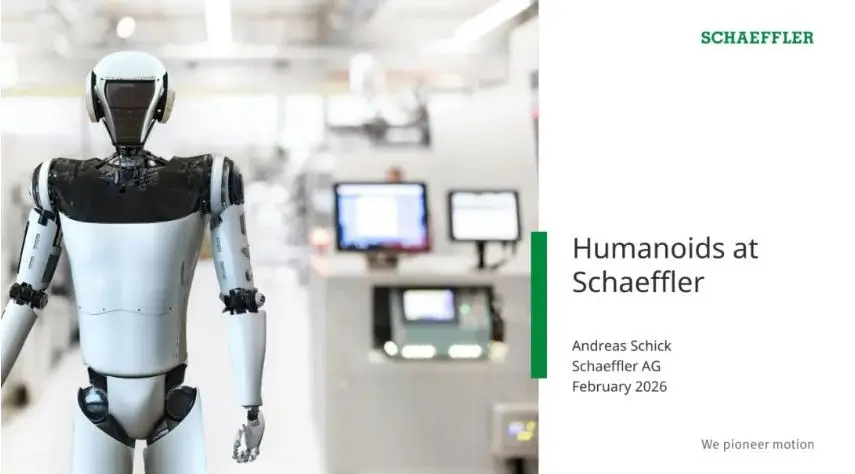
Through its report, “Schaeffler’s Humanoid Robots,” we can extract the following three levels of profound strategic intent:
1. Disassembling the Humanoid Robot: What Schaeffler Saw Was not “Human Form,” But “Movement.”
In Schaeffler’s view, humanoid robots lack the mystique of a specific “form,” possessing only a clear Bill of Materials (BOM) structure. The report data shows that rotary actuators and linear actuators together account for 50% of the total BOM cost of a humanoid robot. This cost primarily consists of motors, reducers, lead screws, bearings, encoders, and drive units.
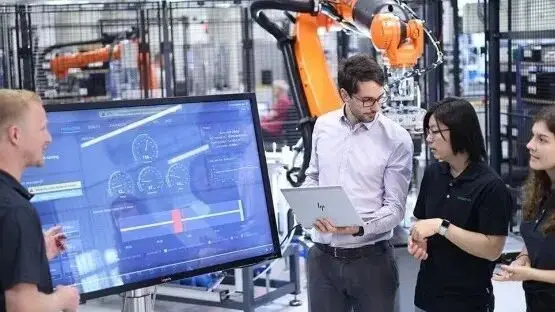
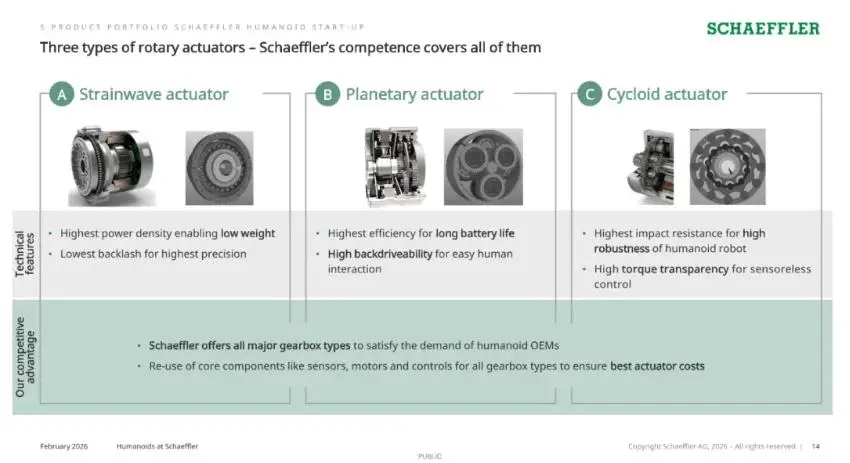
This is precisely Schaeffler’s core strength. By providing rotary actuators using all three mainstream technologies—harmonic, planetary, and cycloidal—and reusing core components to optimize costs, Schaeffler aims to become a “core supplier covering more than 50% of the total material cost of the machine.” This role as a “shovel seller” offers greater resilience than that of a complete machine manufacturer and allows them to better enjoy the certain benefits of industry growth.
2. Build Robots on the Scale of Car Manufacturing
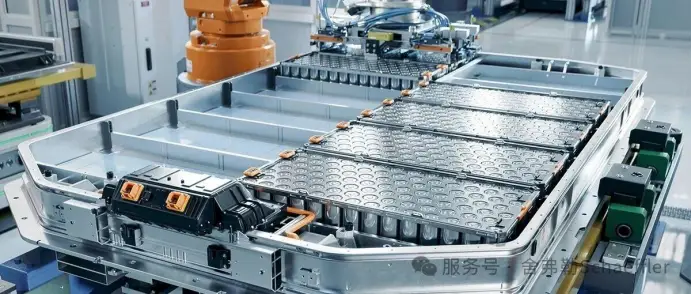
One of the current bottlenecks in the humanoid robot industry lies in the cost, precision, and consistency during mass production. This is precisely where traditional automotive Tier 1 suppliers have an advantage. Schaeffler has over 100 factories worldwide, possessing automotive-grade large-scale manufacturing capabilities and a mature quality control system.
While many humanoid robot startups are still struggling to turn prototypes into reliable products, Schaeffler is already leveraging its vertically integrated capabilities (from raw material processing to modular integration) and global production network to provide “plug-and-play” cost-effective actuators. For example, its “Taicang Humanoid Robot Lighthouse Factory” in China is designed to localize this manufacturing capability, responding with the fastest possible speed to the world’s most dynamic Chinese market.
- Both a Supplier And a “First Experimenter”: Building a Data Closed Loop
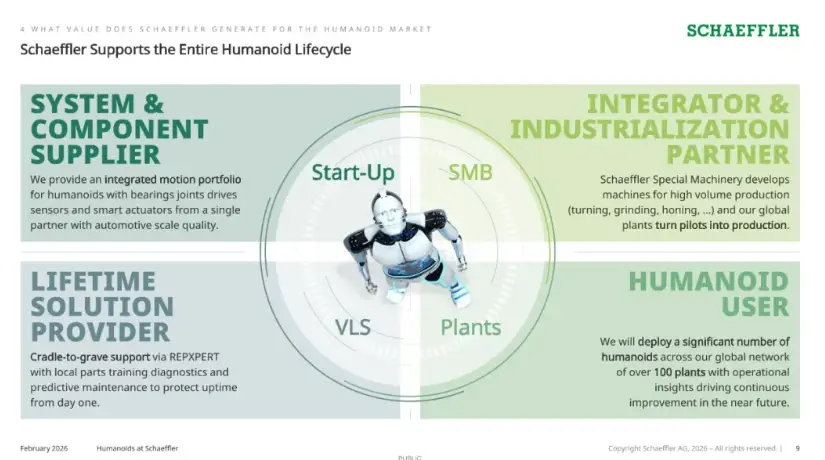
The most forward-thinking aspect of Schaeffler’s strategic layout lies in its dual identity. It is not only a parts seller, but also a user. The company plans to deploy a large number of humanoid robots in 100 factories worldwide by 2030 and has already invested in Agility Robotics, procuring its humanoid robots for logistics applications.
This forms a perfect business loop: Schaeffler has built a “Humanoid Gym” in its factories, defining six “golden scenarios” including handling, assembly, and inspection. Here, robots collect data, train, and iterate through real production tasks, and this optimized data feeds back into Schaeffler’s component R&D. This ability to “learn in battle” is a moat that a pure component contract manufacturer cannot match.
Timing and Choice: Why Now, and Why China?
The Chinese market not only boasts a dense concentration of humanoid robot manufacturers (such as Unitree Robotics, Fourier Robotics, and Logic Robotics), but also possesses the world’s richest and most pressing manufacturing application scenarios.
Schaeffler CEO Klaus Rosenfeld admitted that the company’s interest in humanoid robots is “overwhelmed,” with 32 sample orders and one production order already secured. At a time when the European automotive industry is facing pressure to transform, the humanoid robot business is seen as a promising avenue. By 2035, Schaeffler plans to have new businesses, including robotics, contribute 10% of its revenue, approximately €3 billion.
In Taicang, Suzhou, a fertile ground deeply rooted in German industry, Schaeffler’s new company is not only producing robot parts, but also building a bridge connecting “German precision manufacturing” with “Chinese artificial intelligence applications.” While the global tech community is still debating the form and ethics of humanoid robots, Schaeffler has quietly begun to dissect the market based on cost. This may be the answer German industry is giving in the face of a new round of technological revolution: not blindly chasing trends, but leveraging its superior position in the mechanical field to become the one selling shovels and jeans during the gold rush.
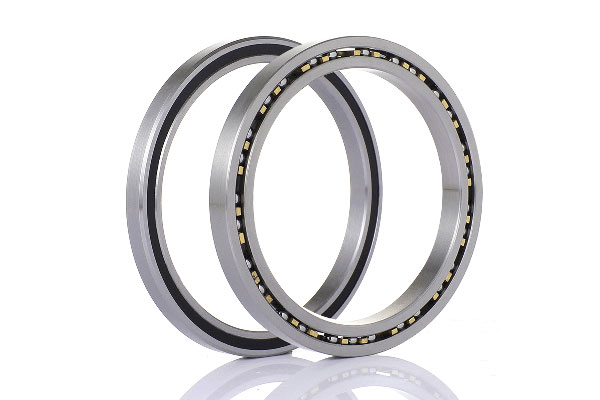
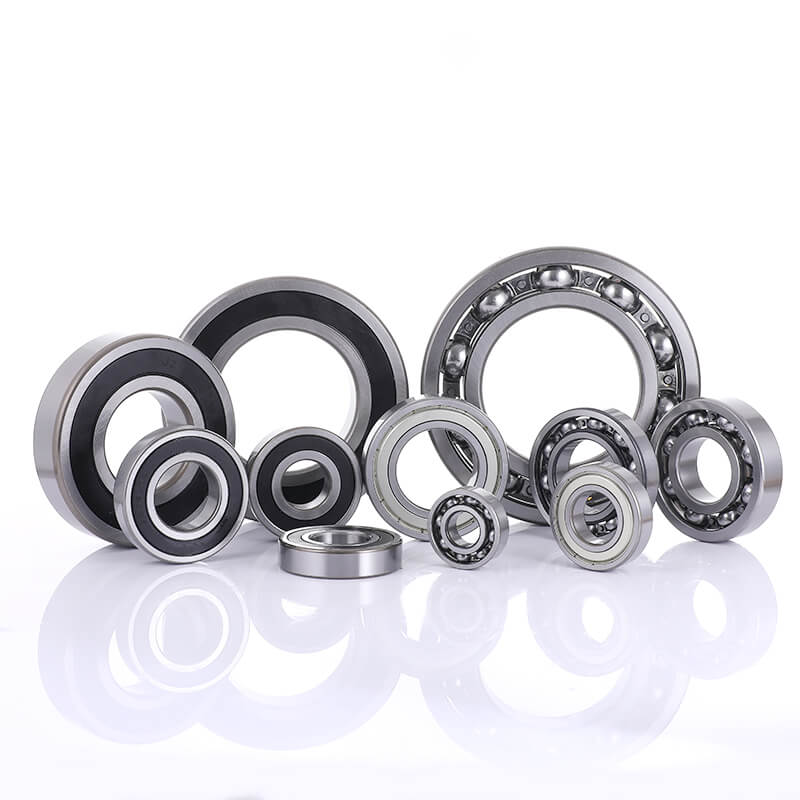
ZMS is a professional bearing supplier in China, we also supply bearings for humanoid from micro ball bearings, angular contact ball bearings, crossed roller bearings and so on. Want to get more information from us? Please feel free to contact us.