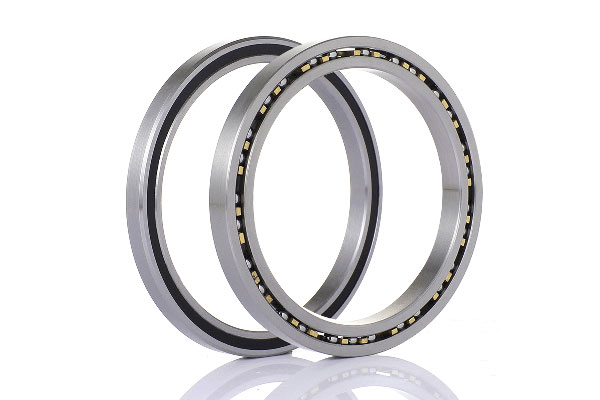
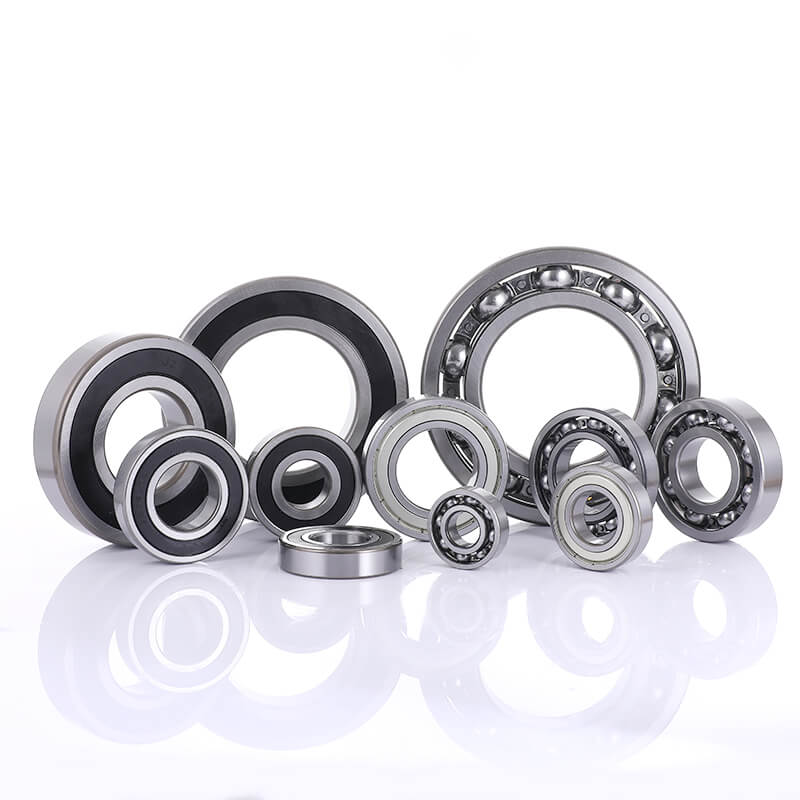
In the world of precision engineering, few components work as hard behind the scenes as angular contact ball bearings. When you add seals to the mix, they become even more powerful — offering contamination protection, grease retention, and truly low-maintenance performance without sacrificing too much speed or load capacity.
Whether you’re designing machine tool spindles, pumps, gearboxes, robotics arms, or high-speed electric drives, sealed angular contact ball bearings deserve a closer look. In this guide, we’ll cover what makes them special, their key advantages, real-world applications, and how they stack up against open or shielded versions.
What Exactly Are Sealed Angular Contact Ball Bearings?
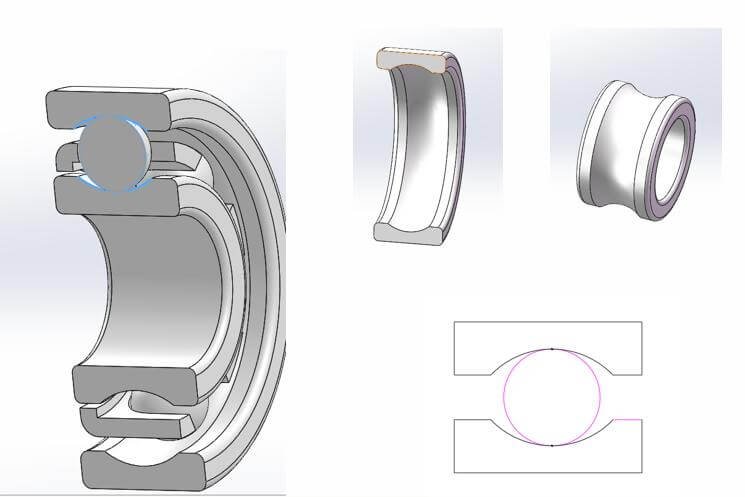
Angular contact ball bearings are designed to handle combined radial and axial (thrust) loads thanks to their offset raceways and a defined contact angle (typically 15°, 25°, 30°, or 40° — higher angles = better axial load capacity).
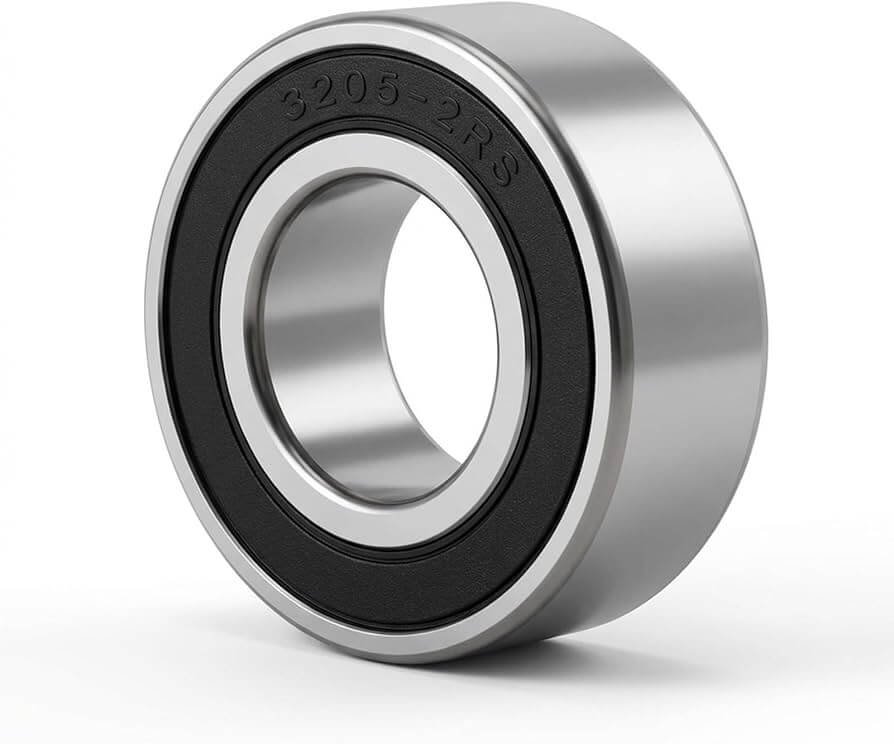
The “sealed” part usually means double rubber contact seals (denoted as -2RS, -2RS1, LLU, LLB, etc.), which press against the inner ring to keep contaminants out and lubricant in. Unlike open bearings (no protection) or shielded ones (-2Z, metal non-contact shields), sealed versions provide the highest level of environmental protection.
They come in two main flavors:
Single-row — Great for high-precision, one-direction axial loads (often used in pairs: back-to-back, face-to-face, or tandem).
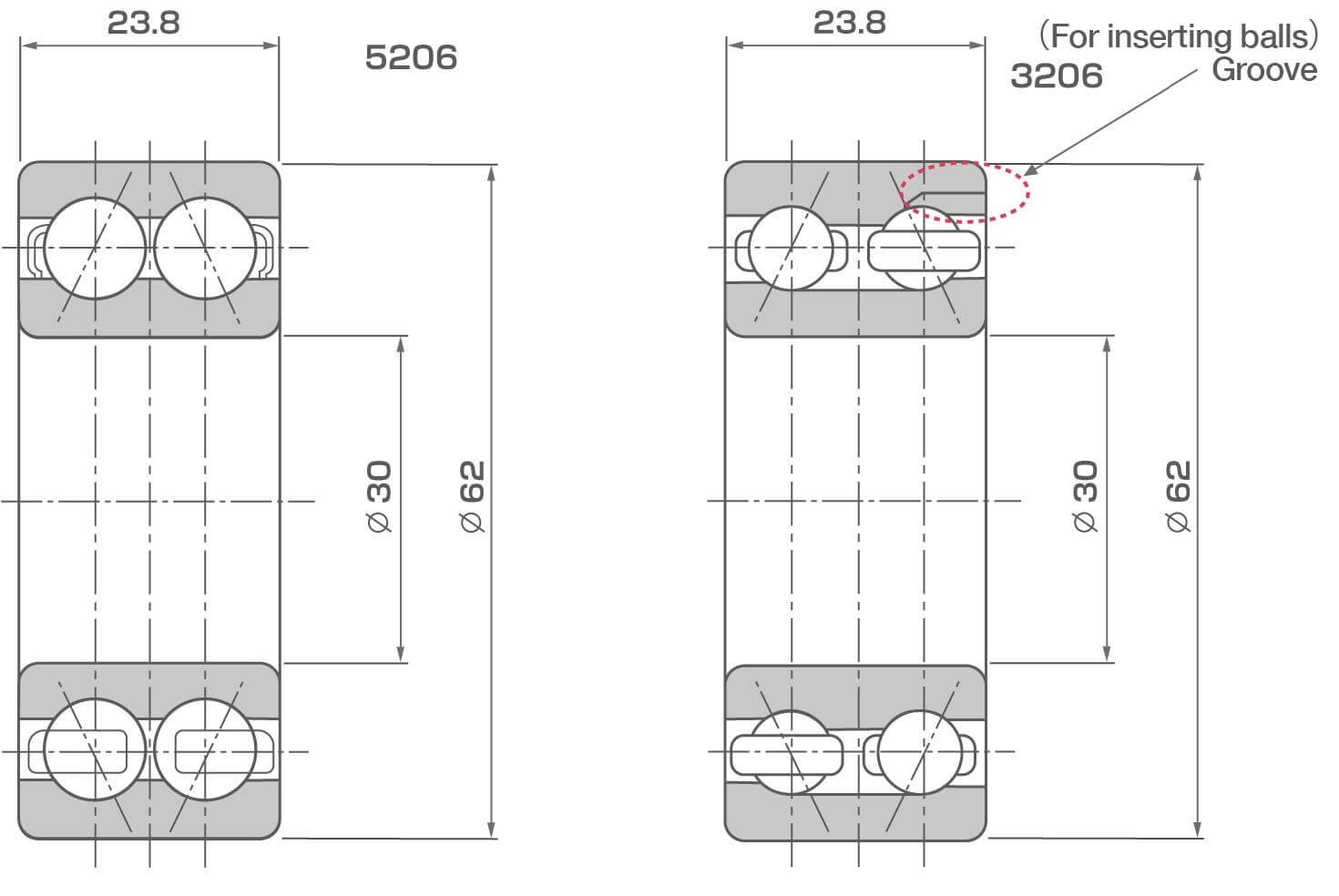
Double-row — Handles axial loads in both directions in a compact package (very popular in general industrial use).
Key Advantages of Choosing Sealed Versions
Sealed angular contact bearings shine in environments where cleanliness, longevity, and minimal upkeep matter most. Here’s why engineers and maintenance teams love them:
Built-in Contamination Protection — Dust, dirt, moisture, and coolant stay out → dramatically extends service life in harsh conditions.
Lubricated for Life — Pre-packed with high-quality grease; no relubrication needed in most applications → reduces downtime and maintenance costs.
Cleaner Operation — Minimal grease leakage → ideal for food processing, cleanrooms, medical devices, or anywhere mess matters.
Good Speed Capability — While not quite as fast as open bearings, modern sealed designs (especially from SKF, NSK, FAG) handle very respectable speeds with low friction seals.
Compact & Reliable — Double-row sealed types offer bidirectional axial load support without needing matched pairs.
Trade-offs? Slightly higher starting torque and a modest reduction in maximum speed compared to open bearings — but for 80-90% of real-world uses, the protection benefits far outweigh this.
Sealed vs. Open vs. Shielded: Quick Comparison
| Feature | Open | Shielded (-2Z) | Sealed (-2RS) |
|---|---|---|---|
| Contamination Protection | None | Moderate (non-contact) | Excellent (contact seals) |
| Grease Retention | Poor (needs relube) | Good | Excellent (lifetime) |
| Max Speed Rating | Highest | High | Moderate to High |
| Friction/Torque | Lowest | Low | Slightly Higher |
| Maintenance | High (regular greasing) | Low | Very Low |
| Best For | Clean, high-speed | General purpose | Dirty/wet, low-maintenance |
In dirty, wet, or hard-to-access installations, sealed wins hands-down.
Popular Applications Where Sealed Angular Contacts Excel
Machine Tool Spindles — Precision single-row sealed types keep coolant and chips out.
Pumps & Compressors — Double-row sealed handle thrust from impellers reliably.
Robotics & Automation — Compact, protected motion in joints and actuators.
Electric Motors & Drives — Especially EV/hybrid vehicle applications.
Textile & Packaging Machinery — Where dust/fibers are constant threats.
Automotive Transmissions & Wheels — Sealed durability under load and vibration.
Quick Buying Tips & Common Sizes
Look for reputable brands like SKF, NSK, FAG, NTN, Timken, or KOYO — they offer premium sealed options with optimized grease and seal designs.
Popular sealed double-row examples (very common and affordable):
5205-2RS → 25×52×20.6 mm
5206-2RS → 30×62×23.8 mm
3208-2RS → 40×80×30.2 mm
For precision single-row:
7006-2RS → 30×55×13 mm
7205-2RS → 25×52×15 mm
Always match the contact angle, preload (if precision grade), and C3/C4 clearance to your application’s speed, load, and temperature needs.
Sealed angular contact ball bearings bridge the gap between high-performance and hassle-free operation. In an era where machine uptime, reduced maintenance, and contamination control directly impact the bottom line, they’re often the smartest upgrade you can make.
ZMS is dedicated in supply sealed angular contact ball bearing in China. If you have any inquiry related to that, please feel free to contact us.