

China’s industrial robot market accounts for approximately one-third of the global market share, offering a vast market for industrial robot applications. However, the domestic robotics market remains dominated by established foreign companies. Harmonic reducers, one of the three cornerstones of industrial robots, also maintain a firm grip on the high-end market. Core components of industrial robots rely on imports. The CSF and SHF series of bearings specifically designed for precision harmonic reducers in industrial robots address this core component challenge, addressing the technological gap in the domestic robotics industry and contributing to the development of China’s high-end equipment manufacturing industry. Today, we will discuss the characteristics of bearings specifically designed for harmonic reducers in industrial robots.
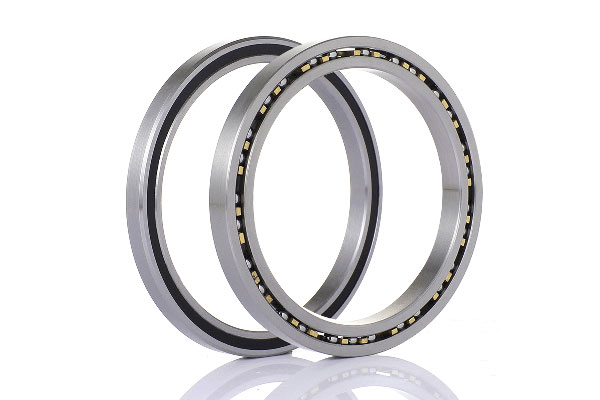
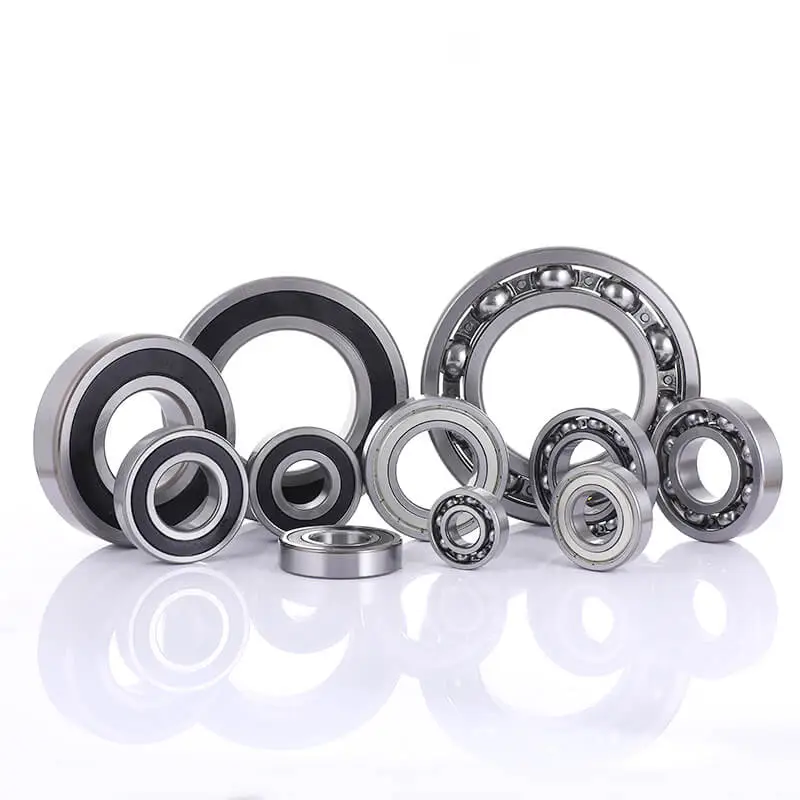
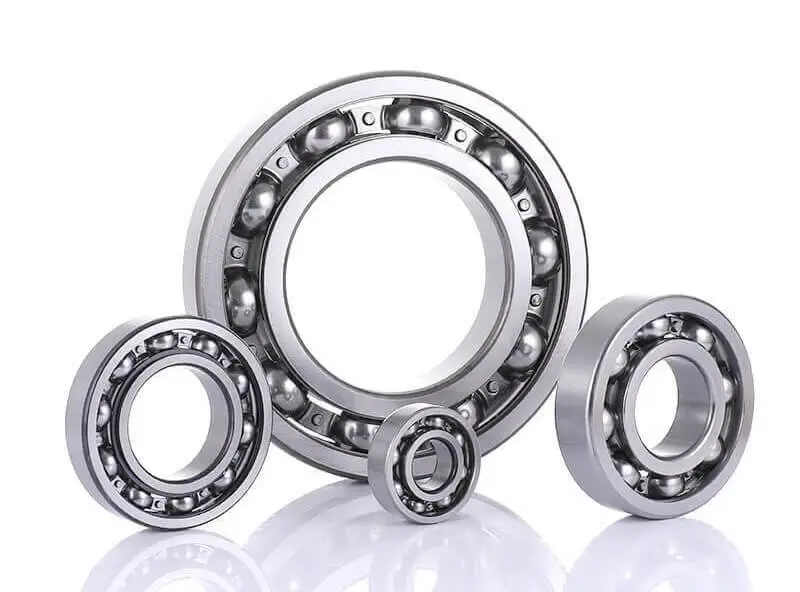
Harmonic reducer bearings are specifically designed for use with harmonic reducers. They consist of two main components. Crossed roller bearings for harmonic reducers are categorized by application: those with a split outer ring and a solid inner ring (BCSF/BCSG series) and those with a solid outer and inner ring (BSHF/BSHG series). The rolling elements are cylindrical rollers arranged perpendicularly at 90° to each other in a V-shaped raceway.
This structure allows a single bearing to simultaneously withstand loads in all directions, including axial loads, radial loads, and overturning moments. The bearings exhibit high stiffness, rotational accuracy, and combined load-bearing capacity. These bearings are compact and have built-in mounting holes for easy installation, making them suitable for various types of harmonic reducers. These characteristics of harmonic reducers perfectly match the transmission requirements of industrial robots, leading to their widespread application in industrial robots.
Technical characteristics of harmonic reducer bearings
1. Bearing negative clearance precise control technology
Special bearings for industrial robot harmonic reducers are mainly used in the joints of robots, so the rigidity requirements for the bearings are relatively high. They need to bear overturning loads, so the bearings are set with preload, that is, negative clearance, before leaving the factory. If the clearance is too negative, the wear will increase, and if it is not enough, the rigidity will be insufficient.
2. Bearing heat treatment deformation control technology
Through a large number of test verifications, a set of deformation values of heat treatment of different product models were summarized, and the technical problem of rusting of blind thread holes during heat treatment was solved.
3. Higher stability
After 3000 hours of operation, the rigidity of the bearing decreases within 5%, and the bearing accuracy remains unchanged.
4. Technology to reduce bearing friction torque while meeting bearing rigidity requirements
On the premise of meeting the bearing rigidity, lower friction torque can reduce the mechanical loss of industrial robots during operation and improve transmission efficiency.
5. Bearing sealing technology
The bearing is installed in a sealed space and filled with a large amount of grease. During operation, heat is generated, causing the internal pressure to increase. The existing standard oil seals cannot meet the requirements and are prone to grease leakage. Based on this working condition, a special robot bearing seal is developed.
ZMS is a professional supplier of harmonic reducers bearings in China.If you need this product from Chinese bearing manufacturers, please feel free to contact us.