
Angular contact ball bearings handle both radial and axial loads at high speeds—think CNC spindles, gearboxes, pumps, and electric motors. But the cryptic numbers on the bearing (like 7205BEP or 7211-B-MP-P5-UA) aren’t random. They encode everything from size and contact angle to cage material and precision class.
Before the blog, we want to introduce us as a professional angular contact ball bearings supplier in China for 15 years.
Mastering the numbering system saves time, money, and downtime. Here’s how to decode them step by step.
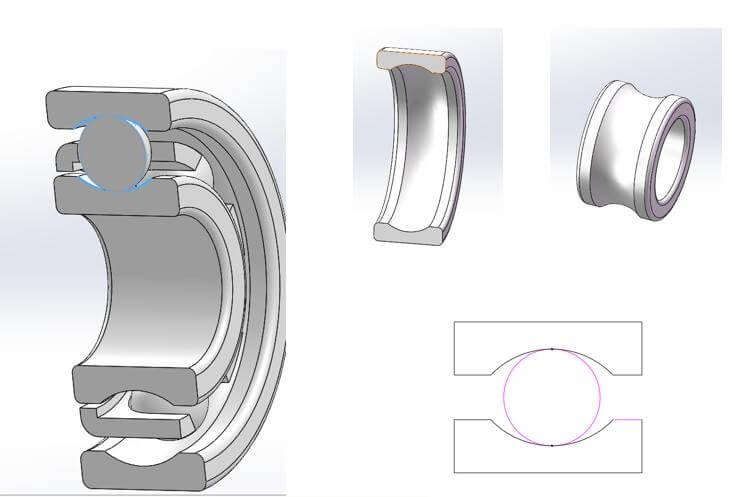
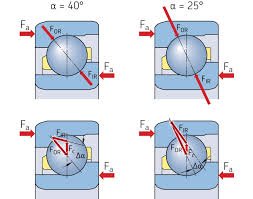
Above: Cross-section views of single-row angular contact ball bearings. The contact angle (α) between the ball and raceway determines axial load capacity—higher angles (e.g., 40°) handle more thrust.
1. Why Angular Contact Bearings (and Their Numbers) Matter
Unlike deep-groove ball bearings (which handle mostly radial loads), angular contact designs have offset raceways. This creates a contact angle (usually 15°–40°) that lets them support combined loads and tilting moments.
They are almost always used in pairs (back-to-back DB, face-to-face DF, or tandem DT) for rigidity and bidirectional axial loads.
The designation system follows ISO standards but with manufacturer-specific suffixes. Major brands (SKF, NSK, FAG, NTN) use similar basic codes but vary in suffix meanings—always check the catalog!
2. Breaking Down the Basic Designation (The Numbers)
Most single-row angular contact ball bearings follow this format:
7 [Dimension Series] [Bore Code]
7 = Single-row angular contact ball bearing
Dimension Series (next digit):
0 = 70 series (extra light)
2 = 72 series (light)
3 = 73 series (medium)
Bore Code (last two digits): Bore diameter in mm.
00 = 10 mm
01 = 12 mm
02 = 15 mm
03 = 17 mm
04 and up = code × 5 mm (e.g., 05 = 25 mm, 06 = 30 mm)
Example: 7205
7 = angular contact
2 = light series
05 = 25 mm bore
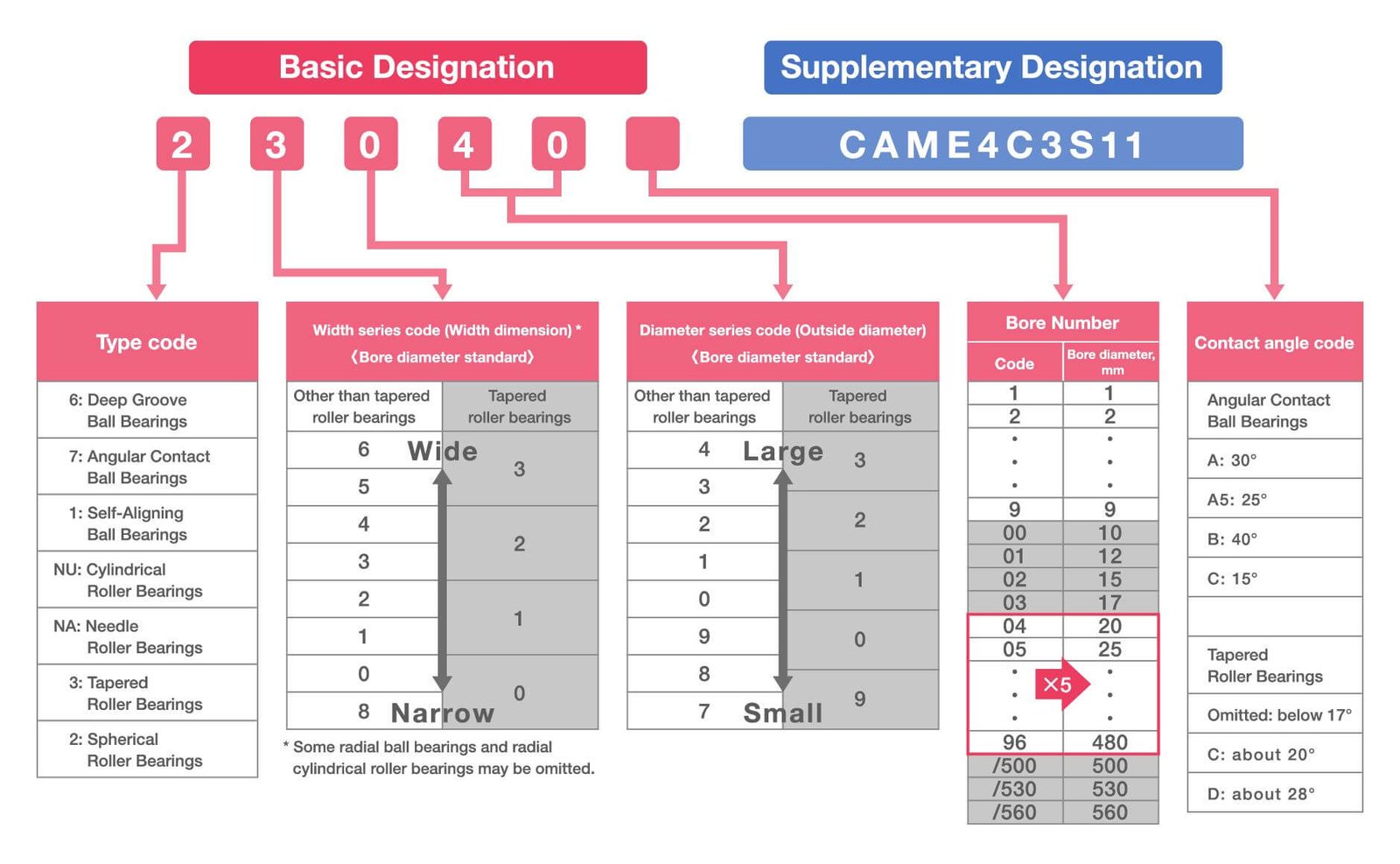
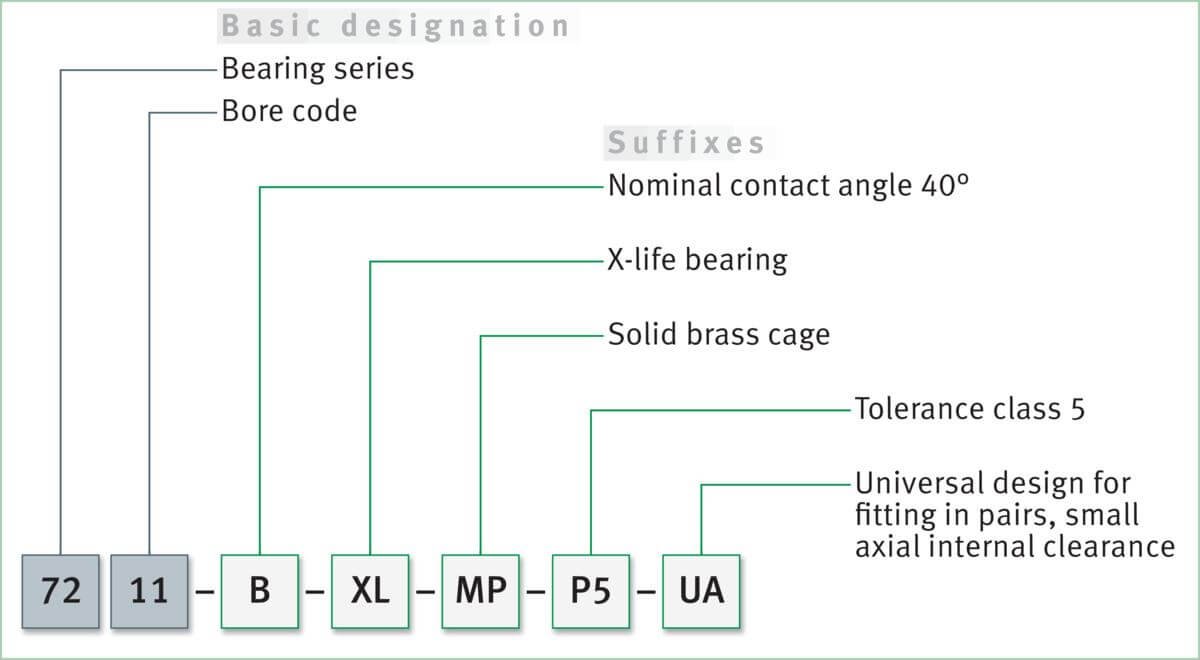
Above: Official NSK and Schaeffler (FAG) designation charts. The “7” type code and bore multiplier (×5) are universal across brands.
3. Contact Angle Suffixes (The Most Important Letter)
The contact angle directly affects load capacity and speed:
| Code | Contact Angle | Typical Use | Axial Load Capacity |
|---|---|---|---|
| C | 15° | High speed, low axial | Low |
| A / A5 / E | 25–30° | Balanced loads | Medium |
| B | 40° | High axial / thrust | High |
Examples across brands:
NSK 7205A = 30°
NTN / SKF / FAG 7205B = 40°
FAG 7211B = 40°
Higher angles = more thrust capacity but slightly lower speed limits.
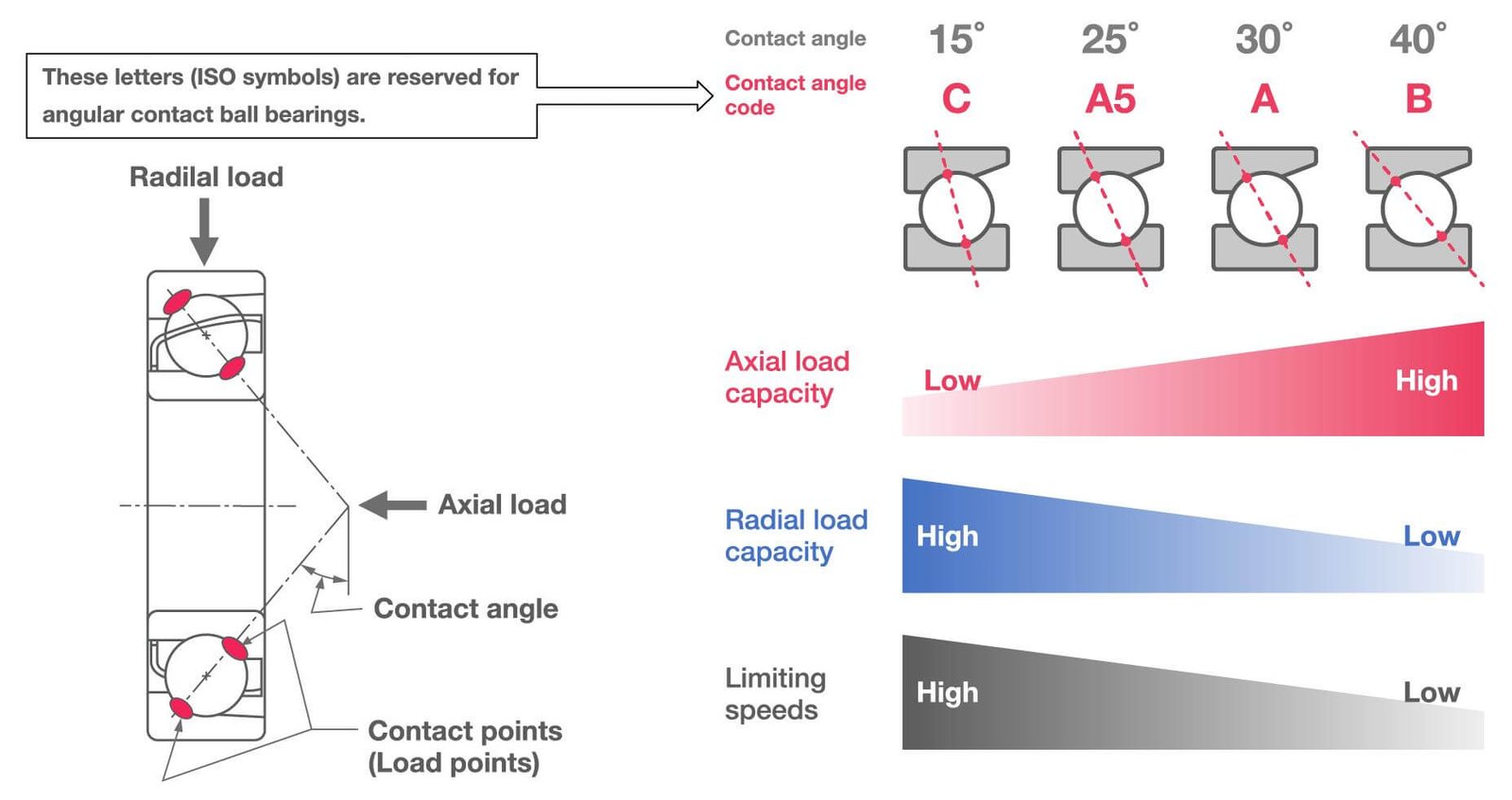
Above: NSK diagram showing how contact angle codes (C, A5, A, B) change radial vs. axial capacity and limiting speeds.
4. Common Suffixes (Cage, Precision, Preload & Arrangement)
After the basic number come letters/numbers that customize the bearing:
Cage
M / MP / L1 = Machined brass (high speed/temperature)
P / T / T1 = Polyamide / phenolic (lightweight, quiet)
J = Pressed steel
Precision / Tolerance
P5 / P4 / P2 = ISO classes (higher = tighter tolerances for spindles)
Equivalent to ABEC 5/7/9
Preload / Clearance
GA / L / EL = Light preload (universal mount)
C3 / C4 = Greater internal clearance
Arrangement (for pairs)
DB = Back-to-back (highest rigidity)
DF = Face-to-face
DT = Tandem
UA / U = Universal (can be mounted any way)
Other
E / XL = Optimized internal design or X-life (longer life)
2RS / ZZ = Seals or shields
Full real-world example (SKF): 7211 BECBM
72 = light series, 11 = 55 mm bore
B = 40° contact angle
E = optimized raceways
CB=Bearing for universal matching. Two bearings arranged back-to-back or face-to-face have Normal axial internal clearance.
M = Machined brass cage, ball centred; different designs are identified by a number following the M, e.g. M2
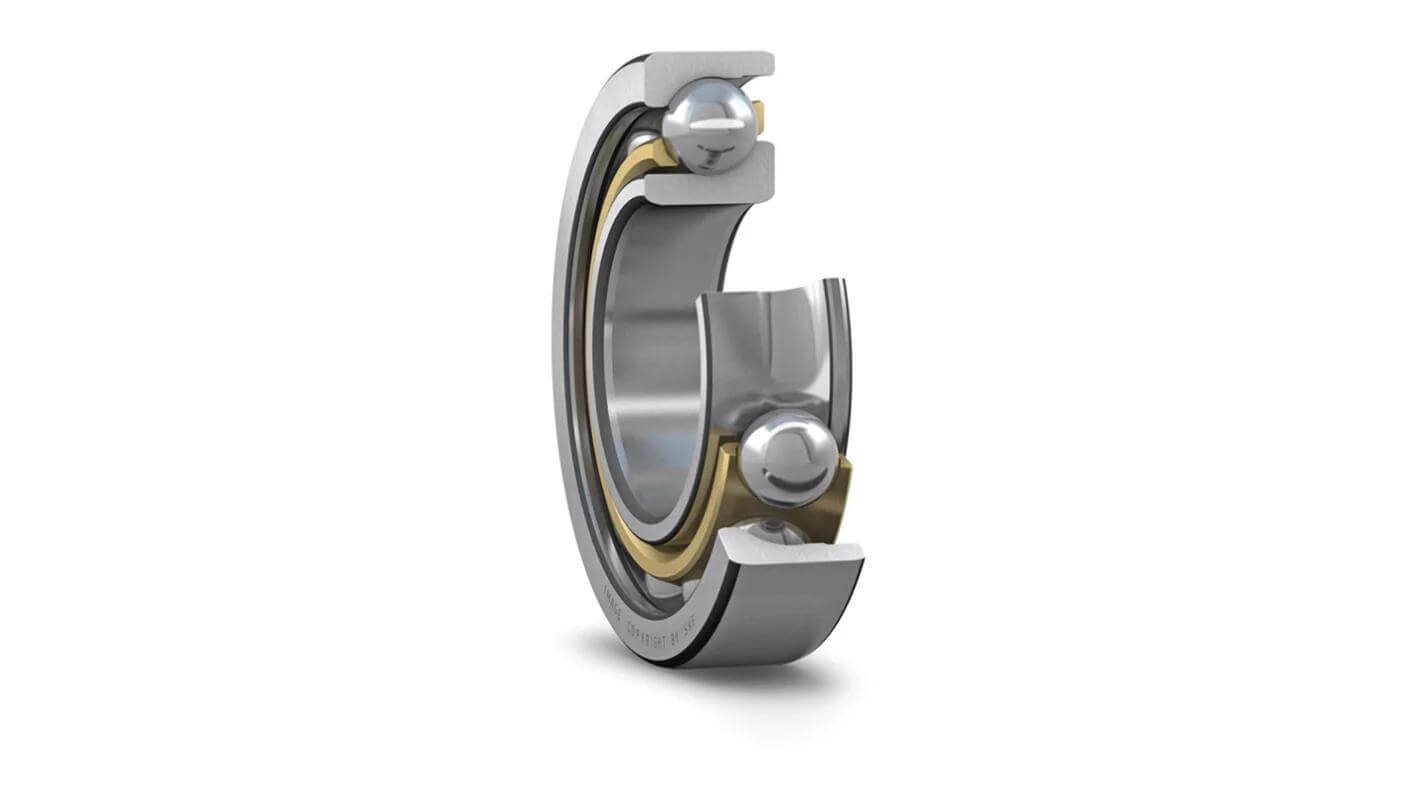
Above: Real SKF angular contact bearings (e.g., 7312 BECBM style) with visible cages and markings.
5. Quick Selection Tips Using the Number
Match bore to your shaft (e.g., 7206 = 30 mm).
Choose contact angle by load: 40° for heavy thrust (pumps), 15–25° for high-speed spindles.
Pairs are standard—look for DB/DF/DT or UA suffix.
Precision: P4/P5 for machine tools; normal for general industry.
Always verify speed, load ratings, and grease in the manufacturer’s catalog (SKF, NSK, NTN, FAG).
6. Common Applications
CNC machine tool spindles
Automotive transmissions & wheel hubs
Centrifugal pumps & compressors
Robotics and high-speed gearboxes
Electric motors and generators
Conclusion: Read the Number, Avoid the Headache
The next time you see 7205 BEP or 7211-B-XL-MP-P5-UA, you’ll know exactly what you’re getting—bore size, contact angle, precision, and mounting style in one glance.
If you still have confusion on this, please feel free to contact us, we can help you in this.