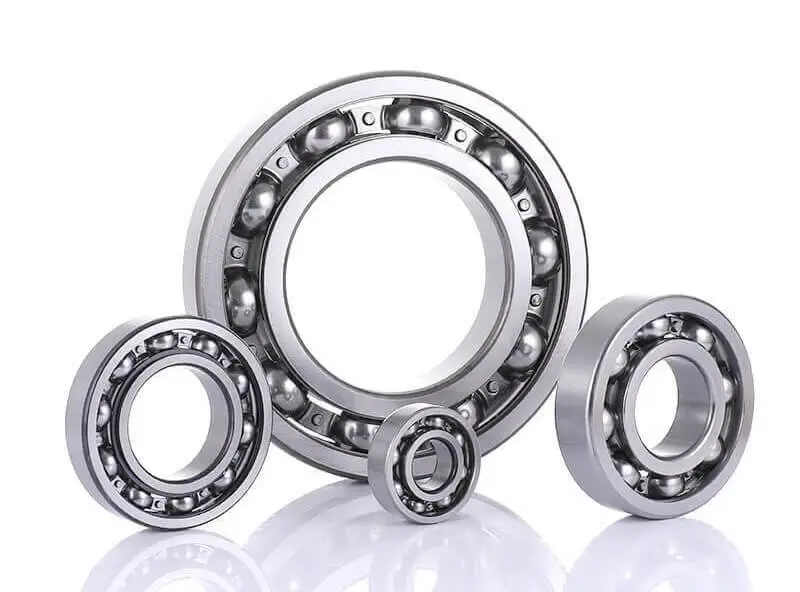
Deep groove ball bearings are essential components in many mechanical systems, providing support and reducing friction in rotating applications. Their versatility and reliability make them a popular choice in various industries, from automotive to aerospace.
Some of the most renowned manufacturers of deep groove ball bearings include:
SKF: A leading global supplier known for high-quality bearings and innovative designs.
NSK: Provides a wide range of bearings with a focus on advanced technology and precision.
FAG (Schaeffler Group): Offers a broad selection of deep groove ball bearings for various applications.
Timken: Recognized for its expertise in bearing technology and high-performance products.
NTN: A major manufacturer known for its extensive line of bearings, including deep groove ball bearings.
Koyo (JTEKT Corporation): Supplies a wide variety of bearings known for durability and reliability.
Buy High-Quality Deep Groove Ball Bearings from China
If you are looking to buy high-quality deep groove ball bearings from China with the best price/performance ratio, please check our deep groove ball bearing page. We offer a wide selection of bearings that meet international quality standards, ensuring you get the best value for your investment.
What are Deep Groove Ball Bearings?
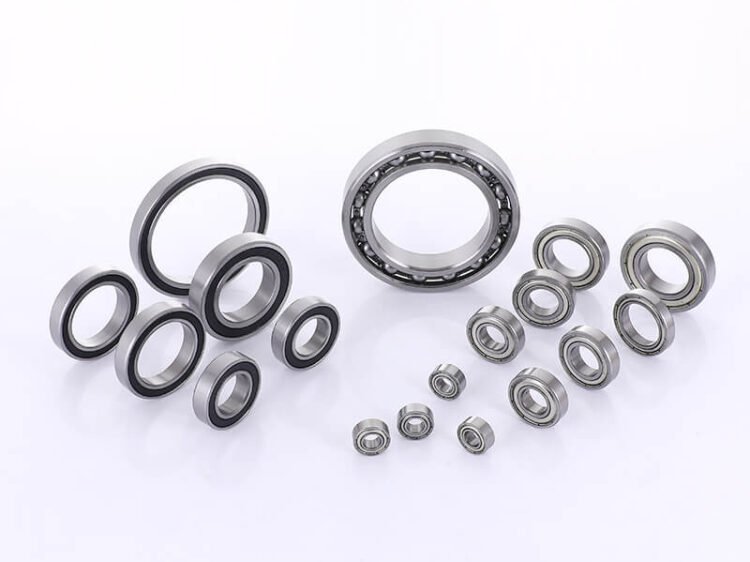
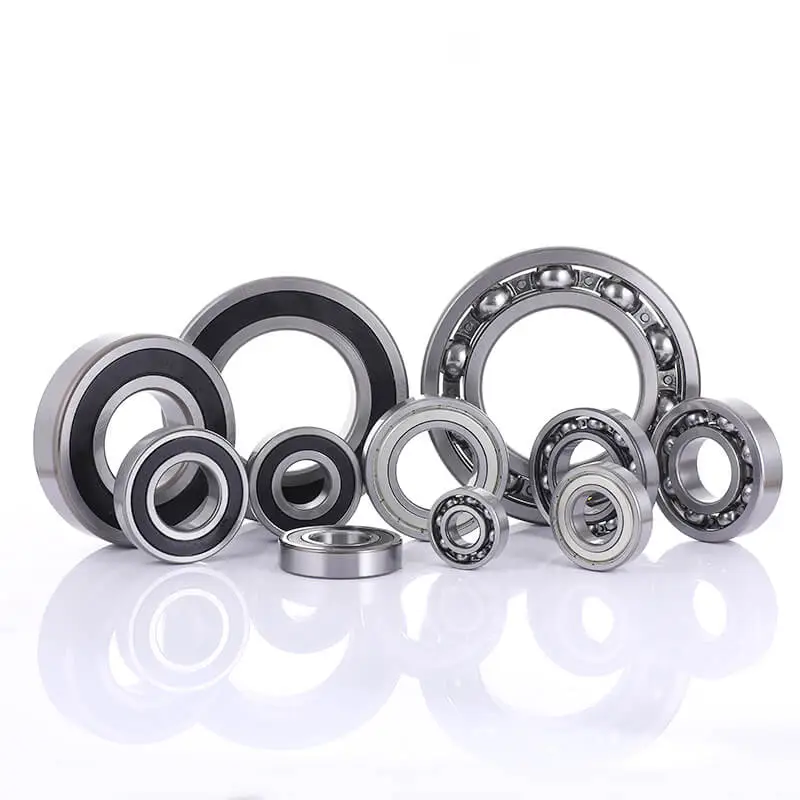
Deep groove ball bearings are one of the most commonly used types of rolling bearings. They consist of an inner ring, an outer ring, a set of balls, and a cage (or separator) that holds the balls in place. The design of deep groove ball bearings allows them to accommodate both radial and axial loads, making them versatile for various applications.
Structure:
Inner Ring: The inner ring fits onto the shaft and rotates with it.
Outer Ring: The outer ring is stationary and fits into the housing.
Balls: The balls are the rolling elements that reduce friction between the inner and outer rings.
Cage: The cage keeps the balls evenly spaced and prevents them from coming into contact with each other.
Types of Deep Groove Ball Bearings
Deep groove ball bearings can be categorized based on various factors, including design, sealing options, and material. Here are some common types:
1. Single-Row Deep Groove Ball Bearings
The most common type, designed to accommodate radial loads and moderate axial loads in both directions.
Example Models:
6200 Series (e.g., 6205, 6206, etc.)
6300 Series (e.g., 6305, 6306, etc.)
6400 Series (e.g., 6405, 6406, etc.)
6700 Series (e.g., 6705, 6706, etc.)
6800 Series (e.g., 6805, 6806, etc.)
6900 Series (e.g., 6905, 6906, etc.)
2. Double-Row Deep Groove Ball Bearings
Designed to handle higher radial loads due to the presence of two rows of balls.
Example Models:
4200 Series (e.g., 4205, 4206, etc.)
4300 Series (e.g., 4305, 4306, etc.)
3. Sealed and Shielded Deep Groove Ball Bearings
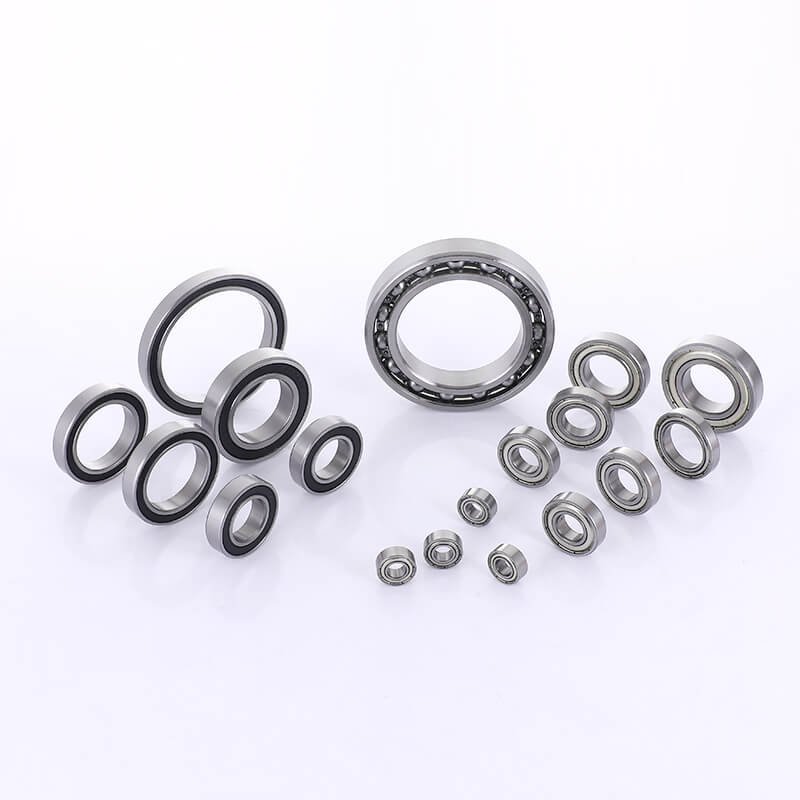
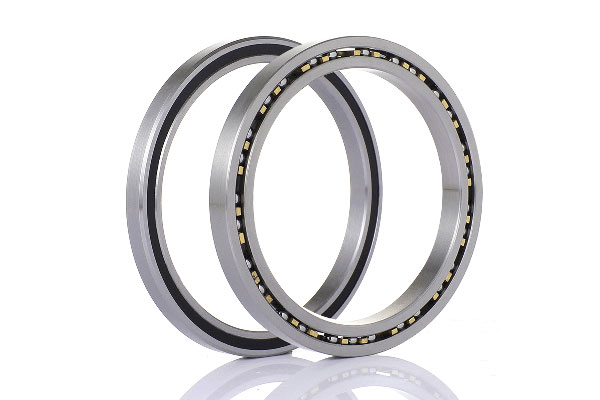
Sealed Bearings: Feature rubber or metal seals to protect against contaminants and retain lubrication.
Shielded Bearings: Have metal shields that provide some protection but allow for more airflow.
Example Models:
6200ZZ (shielded) and 6200RS (sealed).
Deep Groove Ball Bearings by Size
Deep groove ball bearings can also be categorized by size, which is important for selecting the right bearing for specific applications:
Typically have an inner diameter of less than 10 mm.
Example Models:
Miniature Bearings (e.g., 608, 625, 688).
2. Small Deep Groove Ball Bearings
Typically have an inner diameter of 10 mm to 20 mm.
Example Models:
6000 Series (e.g., 6001, 6002, etc.)
6200 Series (e.g., 6200, 6201, etc.)
3. Medium Size Deep Groove Ball Bearings
Generally have an inner diameter ranging from 20 mm to 50 mm.
Example Models:
6300 Series (e.g., 6305, 6306, etc.)
6400 Series (e.g., 6405, 6406, etc.)
4. Large Size Deep Groove Ball Bearings
Usually have an inner diameter greater than 50 mm.
Example Models:
6800 series (6852)
6900 series (6948)
Types of Materials Used in Deep Groove Ball Bearings
Deep groove ball bearings can be made from various materials, each chosen based on the application requirements. Common materials include:
1. Steel
Chrome Steel (SAE 52100 or Gcr15): The most common material for deep groove ball bearings. It offers high load capacity, excellent wear resistance, and good hardness.
Carbon Steel: Generally less expensive but has lower performance characteristics compared to chrome steel. It is used in applications where performance is less critical.
2. Stainless Steel
AISI 440C: Offers excellent corrosion resistance and is commonly used in environments where bearings may be exposed to moisture and chemicals.
AISI 304 and 316: Used in food processing, marine, and pharmaceutical applications due to their high corrosion resistance.
Ceramic materials (like silicon nitride) are lightweight, resistant to corrosion, and can operate at higher temperatures. They are often used in high-speed and high-load applications.
4. Hybrid Bearings
These bearings incorporate ceramic balls with metal rings. They combine the benefits of both materials—lower weight, reduced friction, and improved corrosion resistance.
Grease for Deep Groove Ball Bearings
Grease is a critical component in the operation of deep groove ball bearings. Here are some common grease types and a comprehensive list of brands:
1. Common Grease Types
Lithium-based Grease: Widely used due to its good mechanical stability and water resistance.
Calcium-based Grease: Offers good water resistance and is often used in marine applications.
Synthetic Grease: Provides excellent performance in extreme temperatures and conditions.
2. Popular Grease Brands
Mobil 1: Known for high-performance synthetic greases.
Shell Gadus: Offers a range of greases suitable for various applications.
Castrol: Provides a variety of greases for different industrial applications.
Chevron: Known for its high-quality lubricants, including greases for industrial use.
Kluber Lubrication: Offers high-performance specialty lubricants, including greases for demanding applications.
Kyodo Yushi: A reputable Japanese manufacturer known for its high-quality lubricants, including a wide range of greases for various applications.
Precision and Noise Level of Deep Groove Ball Bearings
Deep groove ball bearings are available in various precision classes which determine how well the bearings can perform at higher speeds and loads. Precision levels can be categorized as follows:
ABEC Ratings: The Annular Bearing Engineers Committee (ABEC) rating system is often used to define precision. Typical ratings include ABEC 1, ABEC 3, ABEC 5, ABEC 7, and ABEC 9, where higher ratings indicate greater precision.
ISO Standards: Bearings can also be classified based on ISO standards, which provide specifications for the dimensional tolerances and overall performance of the bearing.P0, P6, P5, P4, P2.
Noise level: Z1V1, Z2V2,Z3V3.
Clearance in Deep Groove Ball Bearings
Clearance is an important factor in the performance of deep groove ball bearings. It refers to the amount of space between the rolling elements and the raceways. The clearance can affect the bearing’s load capacity, speed, and overall performance. Key points include:
Types of Clearance:
Radial Clearance: The distance between the balls and the inner and outer rings when the bearing is unloaded.
Axial Clearance: The distance between the balls and the rings in the axial direction.
Clearance Classes: Bearings are available in different clearance classes, such as:
C0: Normal clearance.
C2: Reduced clearance for high-speed applications.
C3: Increased clearance for applications with high loads or thermal expansion.
Impact on Performance: Proper clearance is essential for optimal performance. Too much clearance can lead to increased vibration and noise, while too little clearance can cause excessive friction and heat.
Key Features
Load Capacity
Deep groove ball bearings can support both radial loads (perpendicular to the shaft) and axial loads (parallel to the shaft). This dual capability makes them suitable for a wide range of applications.
Versatility
They are available in various sizes and configurations, making them adaptable for different machinery and equipment.
Durability
Typically made from high-quality steel or ceramic materials, deep groove ball bearings are designed to withstand wear and tear, providing a long service life.
Sealing Options
Many deep groove ball bearings come with seals or shields to protect against contaminants and retain lubrication, enhancing their performance in harsh environments.
Applications
Deep groove ball bearings are used in numerous applications across various industries, including:
Industrial Machinery: Found in motors, pumps, conveyors, and gearboxes, where they support rotating shafts and reduce friction.
Automotive: Used in wheel hubs, engines, and transmissions, where they help in smooth operation and load distribution.
Consumer Electronics: Common in devices like fans, hard drives, and power tools, where they enable high-speed rotation and reliability.
Aerospace: Employed in aircraft engines and landing gear systems, where performance and safety are critical.
Advantages:
Low Friction: The design of deep groove ball bearings minimizes friction, which leads to increased energy efficiency and reduced heat generation during operation.
High Speed: They can operate at high speeds, making them ideal for applications that require rapid rotation.
Easy Installation: Standardized sizes and designs allow for straightforward installation and replacement, reducing downtime in machinery.
Cost-Effective: Due to their widespread use and availability, deep groove ball bearings are often more affordable compared to specialized bearing types.
Maintenance-Friendly: With proper lubrication and periodic inspection, deep groove ball bearings can provide reliable performance over extended periods.
Conclusion
Deep groove ball bearings play a crucial role in the functionality of countless machines and devices. Their ability to handle both radial and axial loads, combined with their durability and versatility, makes them a preferred choice in many industries. Understanding their features, types, manufacturers, precision, noise levels, clearance, and applications can help in selecting the right bearing for specific needs, ensuring optimal performance and longevity.