
At the recently concluded 15th China Air Show, a number of new aero engines such as the AEF1200 and 177S attracted much attention. As the pinnacle of modern industrial technology, the engine’s internal aerospace bearings are equivalent to key “connection points” and are crucial to ensuring the reliability of the engine.
When an aircraft engine is running, the rotation speed of the rotor can reach tens of thousands of revolutions per minute. Any mistake in any problem may cause huge centrifugal force and friction, leading to engine failure. So, how do aviation bearings ensure the stable operation of the engine?
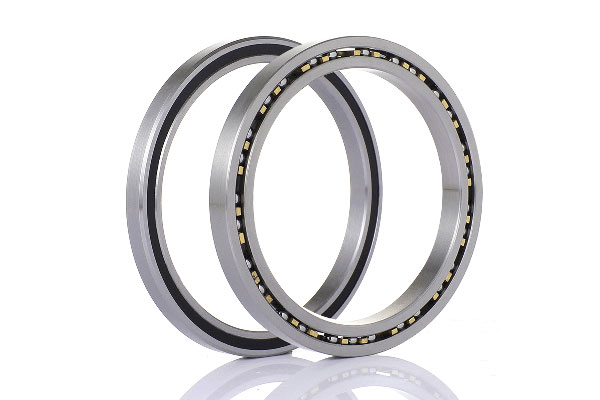
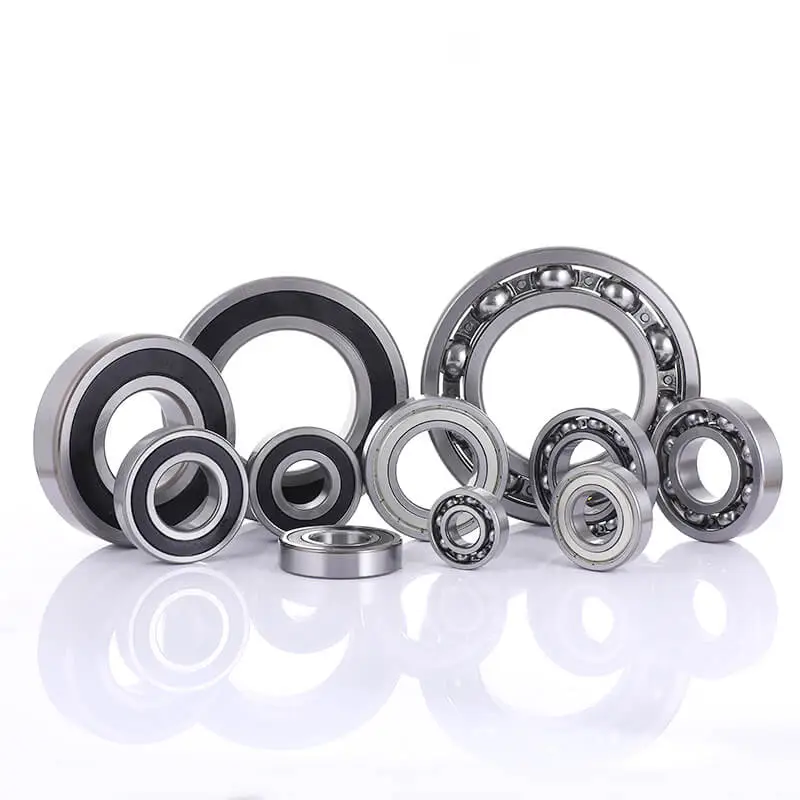
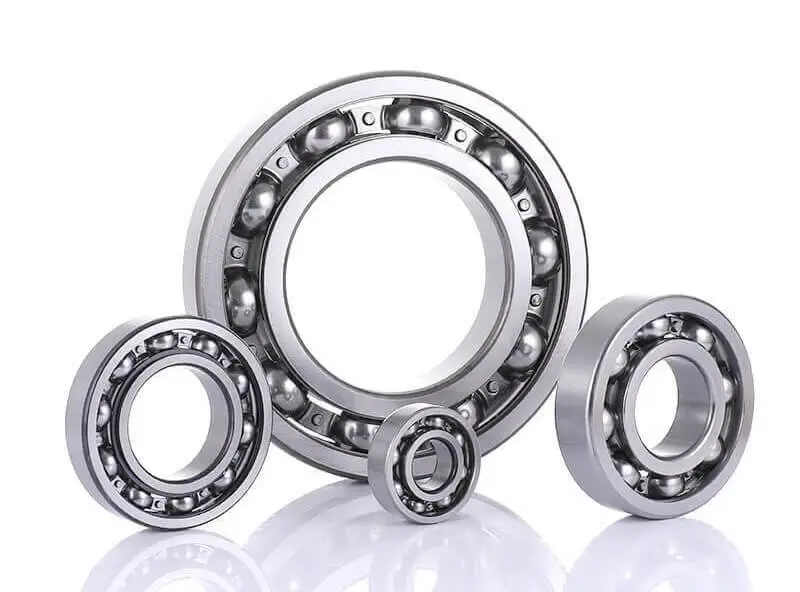
Aviation bearings act as a bridge between the rotor and the engine casing, and are mainly composed of three parts: the inner ring, the outer ring and the rolling elements. Among them, the inner ring is connected to the rotor, and the outer ring is fixed to the engine casing. The rolling elements achieve a smooth transition between the inner and outer rings, ensuring that the rotor can rotate stably around its axis.
Manufacturing high-quality aerospace bearings is an extremely challenging task. As the performance requirements of aerospace engines continue to improve, especially the increasingly stringent requirements in terms of temperature, load, speed, life and reliability, etc., this makes the design and production of aerospace bearings more complex.
On the one hand, aerospace bearings need to meet extremely precise standards. During high-speed operation, even small dimensional deviations can cause vibrations that affect engine performance or cause failure. Irregularities in the shape of the rolling elements can lead to uneven stress distribution, increase the risk of wear and shorten service life. High surface roughness will not only increase energy consumption, but also produce fine particles, reduce efficiency and create safety hazards.

Therefore, the accuracy of aviation bearings must be strictly controlled. Taking the F100 engine used by the F-15 and F-16 as an example, the shape and size accuracy of its aerospace bearings need to be maintained at the micron level, the roundness error of the rolling elements and raceways does not exceed 1 micron, and the surface finish is controlled within the range of 0.1 to 0.2 microns.
On the other hand, the extreme working environment places extremely high demands on material selection. Aerospace bearings need to withstand huge axial and radial loads, and deal with engine vibration and airflow impact. For example, the internal temperature of the F100 engine can be as high as 1,700 degrees Celsius, and the pressure can reach 20 standard atmospheres. This means that the materials used to manufacture aviation bearings must have high strength, high temperature resistance, high pressure resistance and fatigue resistance.
At present, the aerospace bearings used in many advanced fighter jets mostly use special alloy steel or ceramic materials. For example, the British company Rolls-Royce chooses M50 steel to manufacture aviation bearings. This steel shows excellent high-temperature strength and hardness after heat treatment. Silicon nitride ceramics, with its high hardness, low friction coefficient, excellent corrosion resistance and oxidation resistance, exhibit excellent performance under extreme conditions.
Aviation bearings are one of the important symbols of high-end aviation manufacturing industry and reflect the country’s technical level in this field. With the application of new materials, design optimization, advancement of manufacturing processes and development of testing technology, future aviation bearings will have higher load-bearing capacity, better adaptability, longer service life and higher reliability.