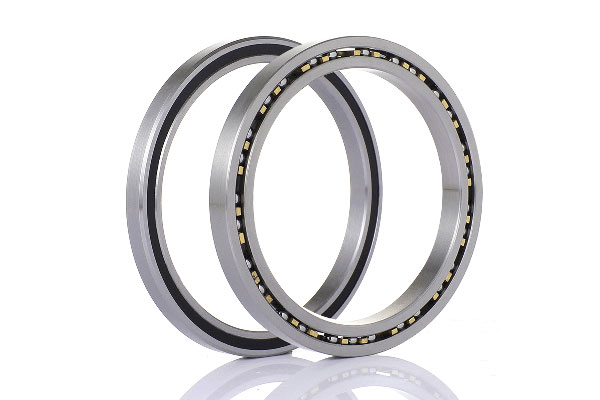


In modern industrial applications, thin section bearings are highly favored for their lightweight, high-precision, and compact design. However, in some challenging environments, such as those exposed to humidity and chemical corrosion, the corrosion resistance of thin-walled ball bearings becomes a critical factor affecting their service life and performance. Improving the corrosion resistance of thin-walled ball bearings is crucial for ensuring the long-term, stable operation of equipment. This article will explore methods for improving the corrosion resistance of thin-walled ball bearings from multiple perspectives, including material selection, surface treatment, lubrication strategies, and environmental control.
How to improve the corrosion resistance of thin-walled bearings
The Importance of Corrosion Resistance: Thin section ball bearings are often used in applications where space is limited and precision is critical, such as aerospace, medical devices, and precision instruments. In these applications, bearings not only withstand mechanical loads but may also be exposed to various corrosive environments. Corrosion not only reduces bearing precision and performance but can also lead to premature bearing failure, impacting the operation of the entire equipment. Therefore, improving the corrosion resistance of thin-walled ball bearings is crucial for extending their service life, reducing maintenance costs, and improving equipment reliability.
Material selection
Stainless steel: Stainless steel is a material of choice for improved corrosion resistance. Compared to ordinary steel, stainless steel has a higher chromium content, which forms a dense chromium oxide film on its surface, effectively preventing corrosion. For example, 316L stainless steel is often used in thin section ball bearings due to its excellent corrosion resistance and good mechanical properties. This material is not only resistant to seawater corrosion but also to a variety of chemical media.
Nickel-based alloys: Nickel-based alloys are a better choice for more severe corrosive environments. Nickel-based alloys contain high proportions of elements such as nickel, molybdenum, and chromium, providing excellent corrosion resistance. For example, Inconel 718 alloy performs well in high-temperature and highly corrosive environments and is suitable for thin-walled ball bearings in aerospace and chemical equipment.
Surface treatment
Electroplating: Electroplating is a common surface treatment method that significantly improves bearing corrosion resistance by coating the surface with a corrosion-resistant metal such as nickel, zinc, or chromium. For example, a nickel coating provides excellent corrosion and wear resistance while also improving the bearing’s appearance. The thickness and uniformity of the coating significantly influence corrosion resistance, necessitating strict control of electroplating process parameters.
Chemical plating: Chemical plating is an electroless coating technique that forms a uniform metal coating on the bearing surface through a chemical reaction. Compared to electroplating, chemical plating provides a more uniform thickness and can cover complex shapes and corners. For example, chemical nickel plating offers excellent corrosion resistance and hardness, making it suitable for high-precision, thin-walled ball bearings.
Ceramic coating: Ceramic coating is another effective surface treatment. Ceramic materials offer high hardness and corrosion resistance, effectively protecting bearing surfaces from corrosion. For example, alumina ceramic coatings can significantly improve bearing resistance to chemical corrosion, making them suitable for thin-walled ball bearings used in chemical equipment and medical devices.
(3) Lubrication strategy
Selecting the right lubricant: The choice of lubricant is crucial to the corrosion resistance of thin-walled ball bearings. In corrosive environments, a lubricant with rust and corrosion protection should be selected. For example, synthetic lubricants offer excellent chemical stability and corrosion resistance, protecting bearings in harsh environments. Lubricants containing rust and corrosion inhibitors can also effectively improve the corrosion resistance of bearings.
Lubricant sealing: Lubricant sealing is an important measure to prevent corrosion. The use of sealing rings or gaskets can effectively prevent corrosive media from entering the bearing, thereby extending the service life of the lubricant and the corrosion resistance of the bearing. For example, in humid environments, the use of a double-layer sealing structure can significantly improve the moisture resistance of the bearing.
(4) Environmental Control
Controlling ambient humidity: Ambient humidity significantly affects the corrosion resistance of thin-walled ball bearings. In high-humidity environments, water films tend to form on the bearing surface, accelerating the corrosion process. Controlling ambient humidity can effectively reduce the occurrence of corrosion. For example, using dehumidification equipment or desiccants can help maintain a dry environment during storage and use.
Isolating corrosive media: In some special applications, thin-walled ball bearings may be exposed to chemically corrosive media. By isolating these media, corrosion can be effectively reduced. For example, using a protective shield or isolation membrane can isolate the bearing from the corrosive media, thereby extending its service life.
ZMS is a professional thin section ball bearing supplier in China. We supply high quality thin section bearings including stainless, ceramic material based on standard chrome steel. Custom types also available.
Please feel free to contact us when you have such demand.