SKF has recently launched the CeraDrive series of hybrid ceramic bearings, aiming to make hybrid ceramic technology accessible to a broader range of electric motor designs—moving beyond its previous limitation to high-end or specialized applications. According to product specifications, the ceramic rolling elements in CeraDrive bearings provide electrical insulation, which interrupts stray current paths and prevents electrical erosion. Furthermore, the smoother ceramic surfaces reduce friction, thereby improving lubrication, lowering heat generation, and enabling operation at higher rotational speeds. The high hardness of the ceramic material also serves to resist surface damage and wear.
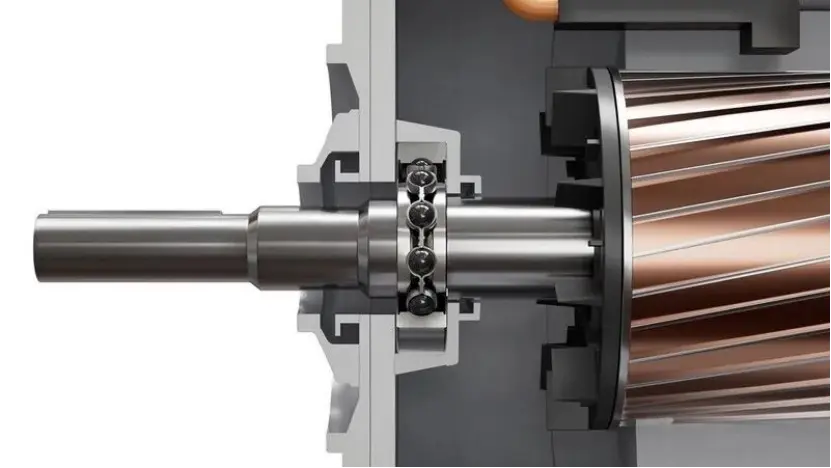
These three points correspond to common causes of motor bearing failure. With the widespread adoption of variable-frequency drives (VFDs), the issue of stray currents in motors has become increasingly prominent. In principle, the PWM voltage waveform output by a VFD contains high-frequency components. Due to parasitic capacitance between the stator windings and the rotor, this high-frequency voltage is capacitively coupled to the rotor, generating a shaft voltage. Once this shaft voltage reaches a certain threshold, it breaks down the bearing’s lubricating film, resulting in a shaft current. As the current flows through the contact zones between the rolling elements and the raceways, localized, instantaneous high temperatures melt the metal surface; upon cooling, this leaves behind tiny pits—a phenomenon known as electrical erosion. Once formed, these pits act as stress concentration points, which often serve as the initiation sites for subsequent fatigue spalling. Traditional mitigation strategies include the use of carbon-brush grounding, insulating coatings, and ceramic ball bearings; CeraDrive employs the ceramic ball approach. Furthermore, lubrication conditions within a motor are often suboptimal, with the ingress of contaminants and exposure to high temperatures further accelerating surface degradation. According to SKF, compared to standard bearings, CeraDrive offers a longer service life, up to eight times the grease life, reduced maintenance requirements, and higher overall reliability. The “eight-fold” figure is not unreasonable in the context of VFD-driven motors that operate continuously without frequent grease replenishment—under the combined influence of high temperatures and electrical erosion, the degradation of grease in standard bearings is significantly accelerated.
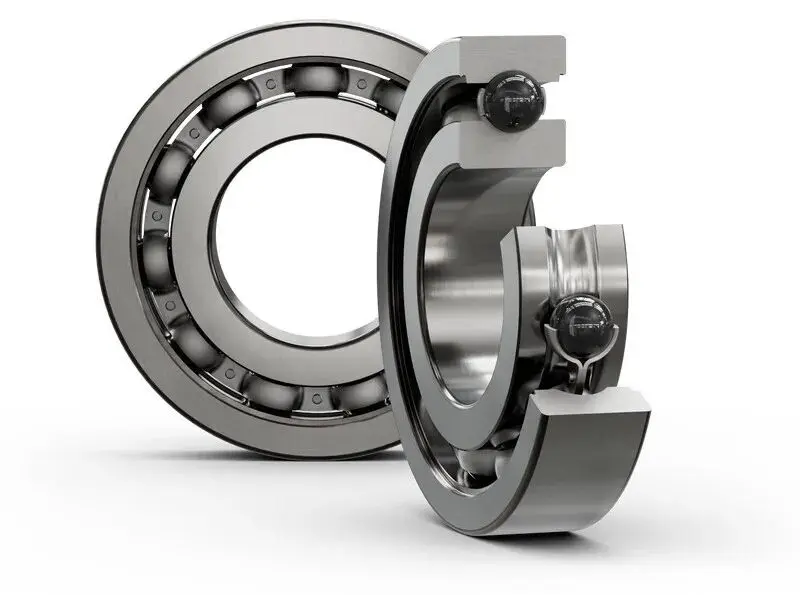
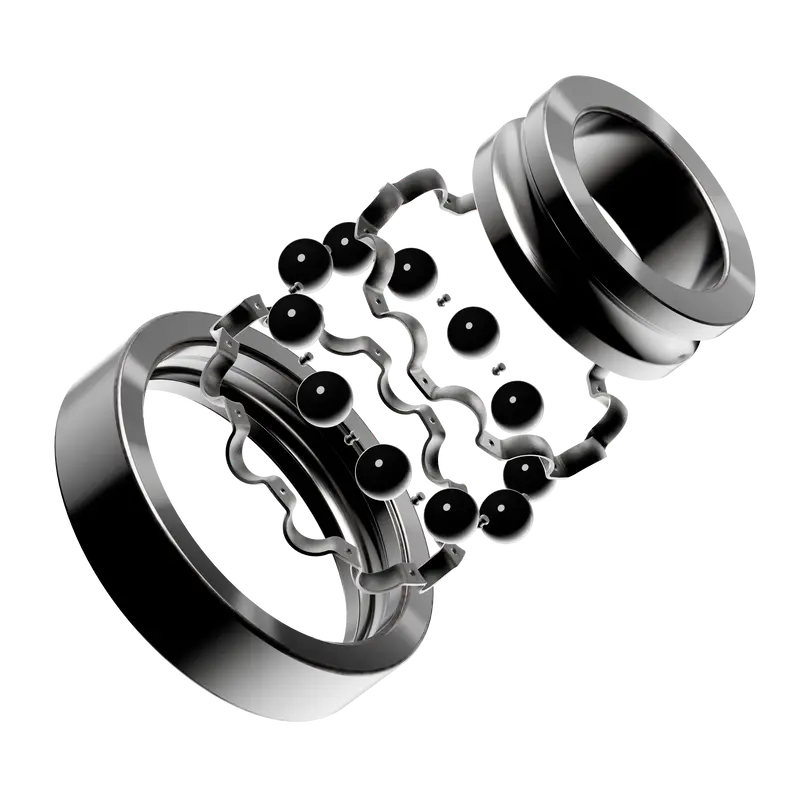
The newly released CeraDrive features an optimized internal structure, utilizing smaller, lighter ceramic rolling elements paired with high-performance steel rings. This design retains the advantages of hybrid ceramic technology while offering greater compatibility with a wider range of electric motor designs. SKF highlights that this series can be integrated directly into existing designs, eliminating the need for a motor redesign. This is a practical benefit for motor manufacturers, as any bearing replacement that necessitates structural changes to the entire unit would significantly drive up implementation costs; the ability to perform a direct swap lowers the barrier to entry considerably. However, the term “direct replacement” warrants closer scrutiny. While bearings are standardized components, the space allocated for them within a motor design—along with the preload method, type of grease, and sealing configuration—are all highly specific to the existing setup. The claim that no redesign is required likely implies that the replacement can be carried out without altering the dimensions of the original bearing housing; it does not mean that motor engineers have no further work to do. In practice, factors such as grease compatibility, preload settings, and bearing clearance specifications would still need to be re-verified.
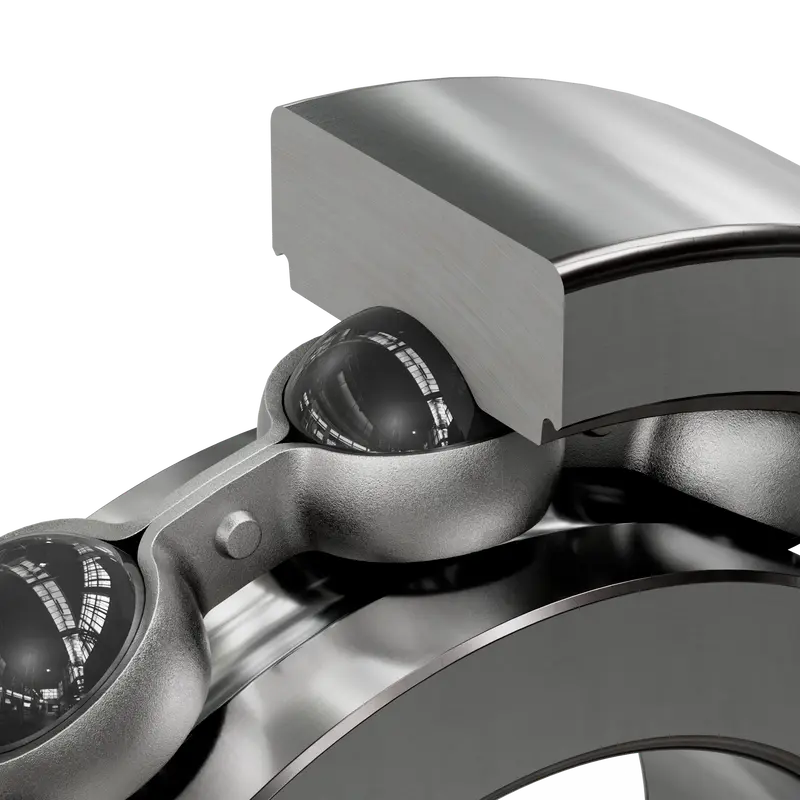
SKF summarizes the value of CeraDrive across several dimensions: reducing unexpected failures, extending maintenance intervals, improving the predictability of uptime, enhancing lubrication performance, resisting wear, and lowering the total cost of ownership. The documentation also notes that by reducing friction and heat generation, this product line facilitates more efficient motor designs—including reliable operation in variable-frequency drive (VFD) applications. It is important, however, to distinguish between different types of issues: while hybrid ceramic bearings address challenges related to electrical erosion and lubrication, they do not resolve problems stemming from installation or maintenance. Factors such as heavy loading, misalignment, seal failure, or the selection of an inappropriate grease can each independently lead to premature bearing failure. The actual increase in service life provided by CeraDrive depends on specific operating conditions, lubrication management, and installation precision; consequently, there is often a gap between laboratory data and real-world field performance.
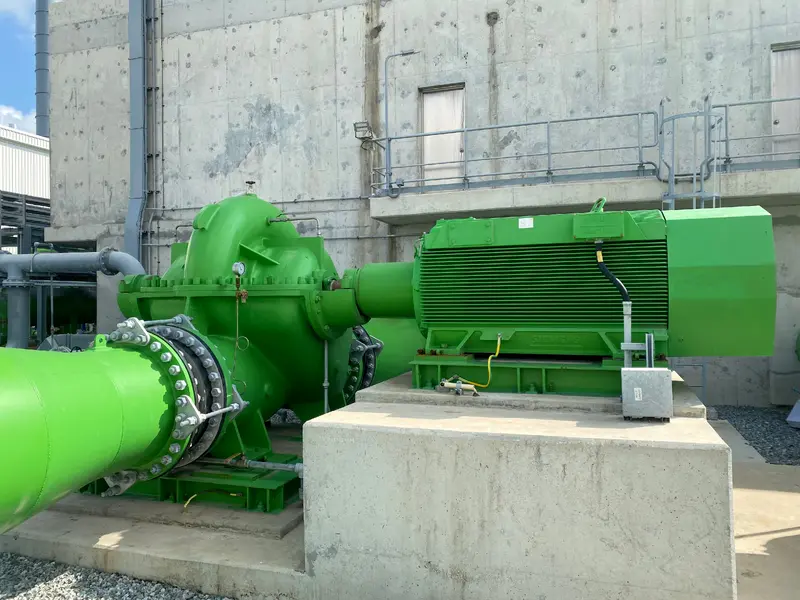
Electric motors are the most ubiquitous mechanical devices in the industrial sector, and the adoption of variable-frequency drives (VFDs) for energy-efficiency upgrades continues to grow. As IE3 and IE4 efficiency standards become mandatory in an increasing number of markets, motor manufacturers are compelled to seek efficiency gains at the design stage—a process for which VFDs offer the most direct solution. While the issue of shaft currents—a byproduct of VFD usage—is not a new phenomenon, the high cost of hybrid ceramic bearings has historically limited their application to sectors with exceptionally high reliability requirements, such as wind power, rail transit, and high-speed spindles. The launch of CeraDrive signals SKF’s strategic move to transition hybrid ceramic bearings from a “premium option” to a broader range of industrial motor applications.
SKF is not the only player in the niche market for insulated bearings. Schaeffler’s “VoltShield” series, for instance, utilizes a polymer-coating approach—encasing the outer or inner ring in a high-performance plastic—which is relatively cost-effective but limited in terms of temperature resistance and load-bearing capacity. NTN also offers insulated bearing solutions, featuring both ceramic-ball and coated variants. SKF’s decision to launch “CeraDrive” at this juncture stems from its long-standing expertise in hybrid ceramic technology, while also allowing the company to address a broader spectrum of insulation requirements across its product portfolio. Although hybrid ceramic bearings offer superior performance limits compared to coated or polymer-encased alternatives, they also come at a higher price point. If CeraDrive can strike a new balance between performance and cost, it could help SKF expand its market share in the electric motor bearing sector. The primary cost drivers for hybrid ceramic bearings are the ceramic balls and the machining of the bearing rings; the processes involved in sintering and precision-grinding ceramic balls are significantly more expensive than those for steel balls. While SKF has not disclosed pricing for CeraDrive, its product positioning suggests an intent to drive down costs through large-scale production. If the price can be kept within 1.5 times that of standard insulated bearings, the investment would likely make economic sense for many industrial motors that operate continuously—as the costs associated with unplanned downtime and the labor required for replacements often far exceed the price of the bearing itself.
Whether this solution succeeds hinges on two key factors: first, whether the product’s price point can approach the range acceptable for standard insulated bearings; and second, the willingness of motor manufacturers to adopt it as a direct, drop-in replacement within their existing designs. SKF’s claim that “no redesign is required” serves as a selling point to lower the barrier to adoption, though the actual performance of such replacements remains to be verified through large-scale, volume applications. Furthermore, because the ceramic balls in CeraDrive are smaller and lighter than those found in standard hybrid ceramic bearings, the reduction in the size of the rolling elements may necessitate adjustments to load-bearing capacity. While SKF states that the internal design has been optimized to balance performance and versatility, detailed technical documentation will be required to assess how the product performs across different motor frame sizes and varying load conditions. A notable detail is that the change in ceramic ball dimensions may affect the bearing’s dynamic and static load ratings; therefore, even though SKF emphasizes the product’s broad compatibility with various motor designs, specific parameters must still be carefully verified during the selection process—particularly for applications involving heavy loads or shock conditions.
Overall, CeraDrive is a product with a clear focus: it leverages hybrid ceramic technology to address electrical erosion and lubrication issues in bearings for variable-frequency drive (VFD) motors, while simultaneously lowering the barrier to adoption through design optimization. Whether it can evolve from an “optional solution” into the “default choice” will depend on two critical factors: pricing and real-world feedback from actual replacements. SKF’s long-standing competitors in the motor bearing market will certainly not sit idly by; their future product iterations and pricing strategies will be worth watching closely. For motor manufacturers, CeraDrive offers a way to enhance bearing reliability without requiring major overhauls to existing designs—though the final decision to adopt it will ultimately hinge on a total life-cycle cost analysis.
ZMS BEARINGS CO., LTD. is a dedicated supplier and innovator in the field of hybrid ceramic ball bearings. By pairing premium-grade bearing steel (Chrome/Stainless Steel) with advanced ceramic balls Si3N4, we produce bearings that outperform standard steel bearings in speed, weight, and operational lifespan.