
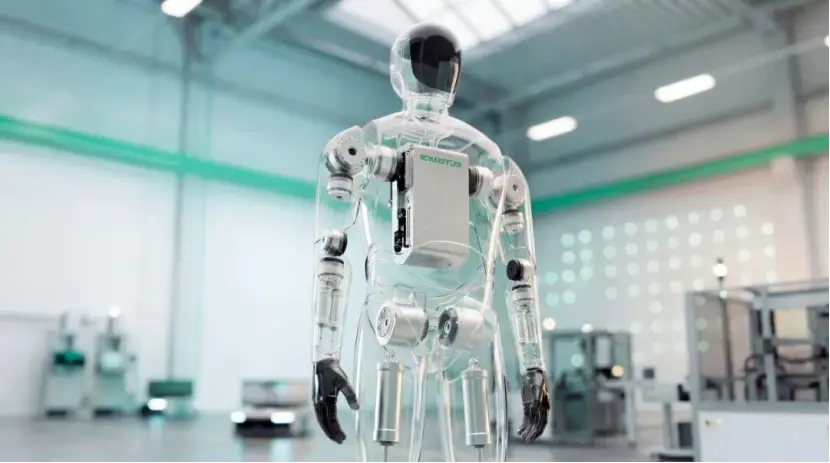
The German Schaeffler Group recently announced the launch of a “formed strain wave gearbox” designed for humanoid robots, with mass production slated to begin in 2027. The century-old German firm—renowned for its bearings and automotive components—is leveraging a disruptive manufacturing process to address the critical bottlenecks of cost and efficiency in the large-scale production of humanoid robots.
Harmonic drives are core components of joint actuators in humanoid robots, responsible for converting the rotational motion of a motor into precise, high-torque output. According to Schaeffler, actuator systems account for approximately 50% of the total manufacturing cost of a humanoid robot, with harmonic drives serving as a critical element within these systems. Currently, the prevailing method for manufacturing harmonic drives is precision machining—a process that involves “sculpting” gear geometries out of metal blanks through techniques such as cutting and grinding. This process is both time-consuming and capital-intensive; as the industry moves toward large-scale mass production, it could become a bottleneck that hinders the widespread adoption of humanoid robots.
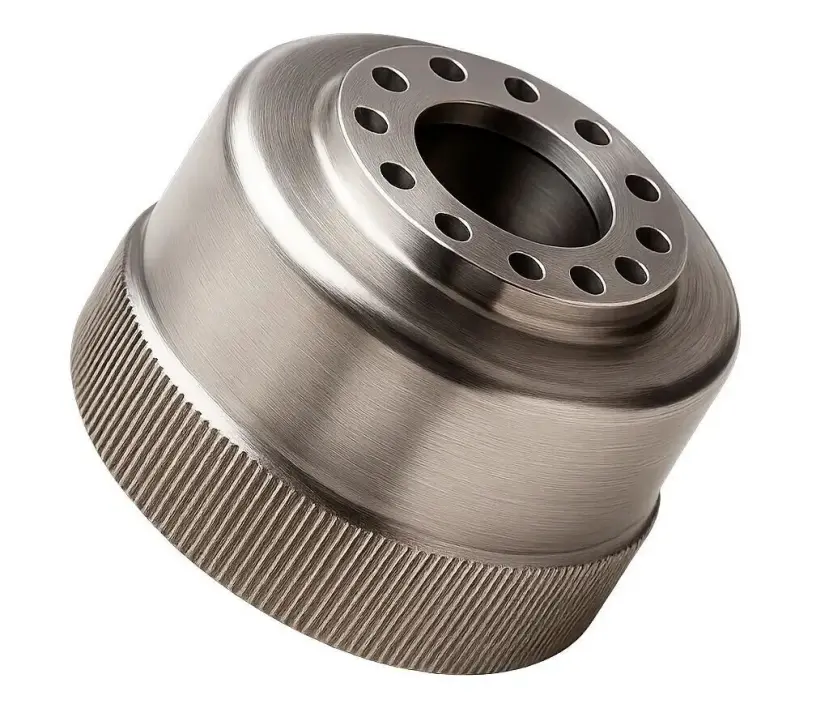
The forming technology recently introduced by Schaeffler replaces material-removal processes with a high-pressure forming technique, reducing the manufacturing time for key components from minutes to seconds. According to the company’s estimates, this new process lowers the production costs of harmonic drives by more than 25% and cuts material consumption by over 75%. In terms of performance, these formed harmonic drives achieve levels of torque, efficiency, and other core metrics comparable to those of machined counterparts. The significance of this breakthrough lies in the fact that it is not merely a laboratory proof-of-concept, but rather a solution rooted in a decade of mass-production experience within the automotive sector. Over the past ten years, Schaeffler has supplied more than 2 million formed harmonic drives for automotive applications to major global markets. It is precisely this long-standing expertise in manufacturing processes that has enabled Schaeffler to rapidly transfer its know-how to the emerging growth sector of humanoid robotics. David Kehr, President of Schaeffler’s Humanoid Robotics business, noted that the company has already deployed humanoid robots within its own global value chain, providing it with first-hand insight into the practical requirements for this technology.

Schaeffler’s entry introduces a new variable into the market for core components used in humanoid robots. While the global harmonic drive market has long been dominated by companies such as Japan’s Harmonic Drive Systems, the industry landscape is beginning to shift. Leveraging its deep expertise in precision manufacturing—supported by a global workforce of approximately 120,000 employees and over 250 branches—along with an extensive patent portfolio spanning bearings, drive systems, and materials, Schaeffler aims to redefine the rules of competition through its large-scale manufacturing capabilities. Market analysts project that the global market for harmonic drives for humanoid robots will reach approximately $239 million by 2026, growing to $455 million by 2032—a compound annual growth rate (CAGR) exceeding 11%. This growth outlook is driven by the accelerating transition of humanoid robots from laboratory settings to commercial applications. With companies like Tesla, UBTECH, and Xiaomi unveiling their own humanoid robot products, the demand for cost reductions in core components has become increasingly urgent.
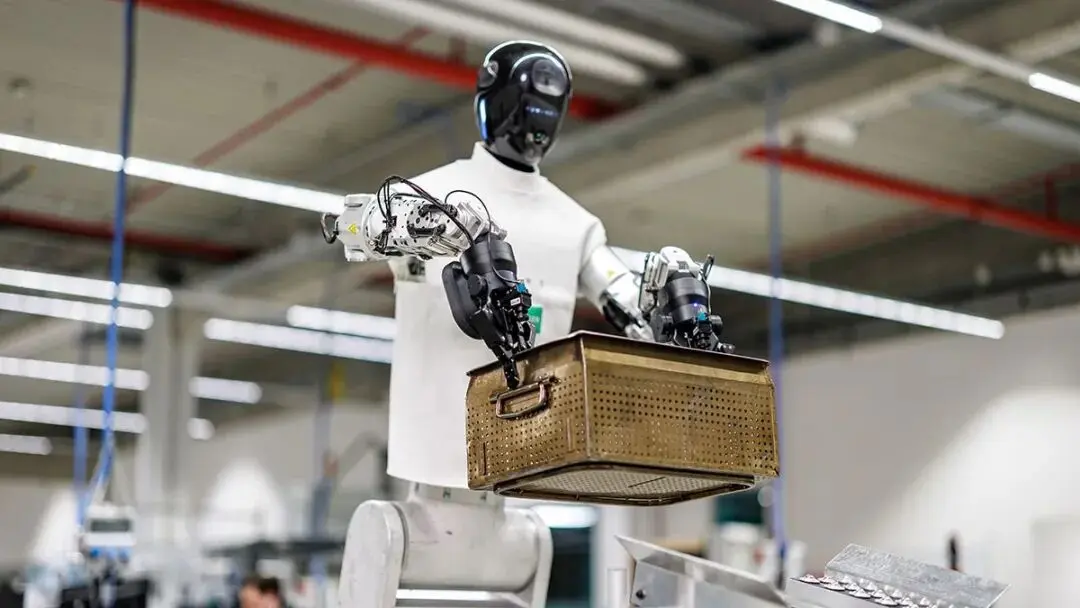
In recent years, Schaeffler has been highly active in the field of humanoid robotics. In February 2026, the company established Schaeffler Embodied Intelligence Robotics (Taicang) Co., Ltd., focusing on the R&D and production of core components and subsystems. It has since forged strategic partnerships with several firms—including Rokae, Leju Robotics, and Hexagon Robotics—covering the entire value chain from core components to full-system integration. The launch of its formed harmonic drive (a type of strain wave gear) marks a pivotal step in Schaeffler’s evolution from a “component supplier” into a “large-scale manufacturing platform.” Mass production is scheduled to begin in Germany in 2027, with plans for a phased expansion into other regions. For the humanoid robotics industry—currently in the early stages of transitioning from the laboratory to commercialization—the ability to significantly reduce the cost of core components will be the decisive factor in whether the sector can truly penetrate the mass market. By leveraging a mature process derived from the automotive industry, Schaeffler has offered its own solution. In precision manufacturing, the chasm between “being able to make something” and “being able to mass-produce it” is often more challenging to bridge than the technology itself. Schaeffler’s chosen technical path essentially applies an industrial mindset to the challenge of scaling up an emerging industry; the effectiveness of this approach will be put to the market test once mass production commences in 2027.
ZMS BEARINGS CO., LTD. specializes in the R&D and supply of premium bearings dedicated to harmonic drive reducers. With a focus on high precision, compact design, and superior durability, we empower the global robotics and automation industries with dependable transmission components and customized OEM services.