
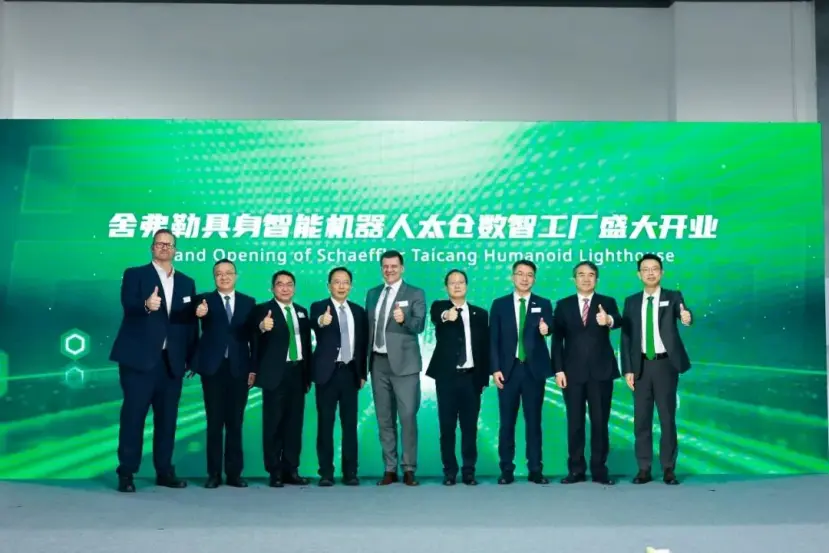
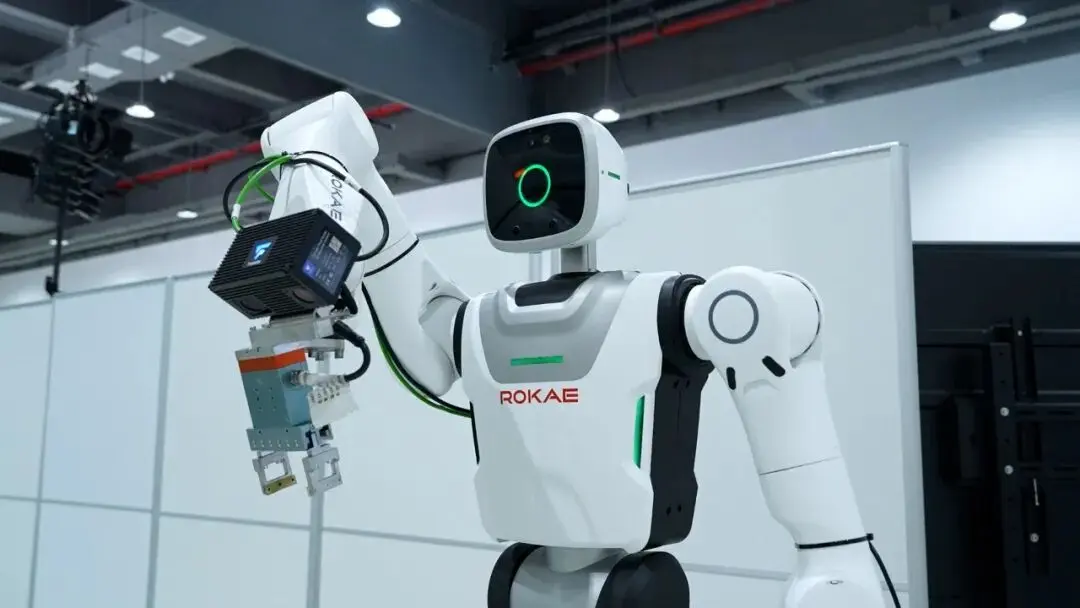
On October 20, Schaeffler officially inaugurated a “lighthouse factory” for humanoid robots in Taicang, Jiangsu. Within this approximately 7,500-square-meter facility, six humanoid robots work collaboratively across five workstations to handle the loading, sorting, assembly, inspection, labeling, and packaging of joint modules—such as linear and rotary actuators. Schaeffler characterizes this development as the point at which key joint modules for the next generation of humanoid robots enter the stage of mass production.
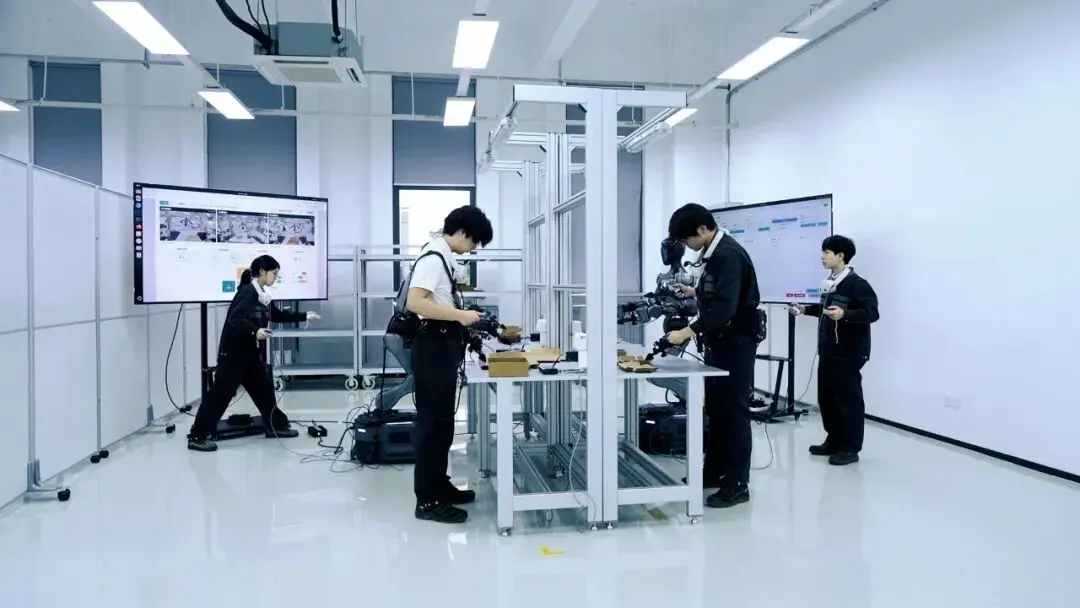
The notion of “humanoids building humanoids” could easily be dismissed as mere marketing rhetoric; however, an examination of the production line configuration reveals that it is far more than a superficial, demonstrative feature. The facility integrates four key functional components: intelligent assembly lines, training and data-acquisition centers, digital twin platforms, and data centers. The digital twin mirrors the physical assembly line in real time, with sensors capturing data on assembly precision, cycle times for individual steps, energy consumption, and equipment status. This allows for process modifications to be tested and optimized within a virtual environment before being implemented on the actual production line. In essence, Schaeffler is transforming the very process of “how a robot performs its work” into a data asset—one that can be captured and iteratively improved—rather than simply selling a collection of joint modules.
The setup of the training center is particularly telling. Here, humanoid robots learn tasks such as visual inspection, packaging, material handling, container movement, and line-side replenishment—all within an environment modeled after the actual conditions found across Schaeffler’s approximately 100 factories worldwide. In other words, the skills acquired by the robots can be directly applied to assembly lines for validation and fine-tuning, with data seamlessly integrated across training, simulation, and production. If this model proves successful, what Schaeffler offers to the market will extend beyond mere actuators to include robot skill sets and deployment expertise—all validated in real-world industrial environments.
Jochen Schröder, Chief Operating Officer at Schaeffler, stated that this marks the first instance within the company’s global network of a closed-loop manufacturing scenario where “humanoids assemble humanoids.” Schaeffler aspires to become a leading supplier and the preferred technology partner in the field of humanoid robotics. Zhang Yilin, CEO for the Greater China region, offered a perspective more closely aligned with the local market: as China’s humanoid robotics industry enters a phase of rapid growth, Schaeffler aims to accelerate its ecosystem development by leveraging its local R&D, manufacturing, and industrial synergy capabilities.
Order data indicates that this business segment is indeed gaining momentum. In the third quarter of 2026, Schaeffler added two new clients in the Greater China region, bringing its global order backlog for the humanoid robot business to approximately €400 million—up from €350 million in the previous quarter. While €400 million remains a small fraction of Schaeffler’s €17.5 billion in revenue for the first three quarters, the growth rate and the expansion of its client base are noteworthy. Schaeffler’s fundamental advantage in this sector lies in planetary roller screws; through its subsidiaries GSA and Rollvis, as well as Ewellix—acquired in 2022—the company and its affiliates once held a combined 66% market share in the high-end planetary roller screw market in China. As the core transmission component for linear actuators in humanoid robots, this part presents high technical barriers and is difficult to replace.
However, this advantage is not without its vulnerabilities. Leading humanoid robotics firms, such as Tesla (with its Optimus project) and Figure AI, are pursuing a strategy of vertical integration, developing their own actuators and transmission components. Schaeffler faces a structural paradox: its largest potential customer base is also the group most likely to bypass it by developing their own solutions. In this context, the value of “lighthouse factories” and training centers lies in building an additional layer of defense—combining manufacturing capabilities, application-specific data, and deployment experience. Even if clients choose to develop certain components in-house, they still require external expertise for full-system assembly, process validation, and the ramp-up to mass production. Schaeffler is betting that this type of demand will prove more enduring than the simple procurement of individual components.
Viewed within the context of China’s manufacturing sector, this factory carries an additional layer of significance. The training environment at the Taicang plant is benchmarked against the actual conditions found across Schaeffler’s roughly 100 facilities worldwide; this implies that the robotics skills and data accumulated in China have the potential to be replicated in other regions. This approach differs from the traditional path taken by foreign enterprises—which typically involved “relocating mature production lines to China”—and instead suggests a model where new solutions are first piloted and refined in China before being exported elsewhere. When Zhang Yilin speaks of “leveraging local capabilities to accelerate the development of an ecosystem in China,” he is likely referring to more than just local sales; he is pointing toward substantive investment in local R&D and manufacturing capacity.
Of course, a single “lighthouse factory” does not change the fundamental reality that the humanoid robot industry is still in its early stages. With six robots performing five distinct processes at fixed workstations, the current setup remains a far cry from “autonomous operation by general-purpose humanoid robots.” Even Schaeffler itself is careful not to overstate the situation; Schröder describes the initiative as “moving humanoid robots from theory to industrial practice”—a far cry from declaring the technology mature. The true test will come during the production ramp-up phase: Can the yield rate for joint modules be stabilized? Can the skills acquired in training centers be transferred across different operational environments? And can the €400 million in orders be delivered on schedule—and ultimately lead to repeat business? A lighthouse factory is a starting point, not the final answer.
ZMS BEARINGS CO., LTD. is a specialized supplier of precision bearing solutions for humanoid robots in China. We engineer and manufacture a wide range of lightweight, high-torque, and ultra-precise bearings—including crossed roller bearings, thin-section bearings, and harmonic drive bearings—specifically designed for robotic waist, hip, knee, and arm joints.